Don’t Believe The Narrative: The El Salvador Beyond The Headlines
SAN SALVADOR, El Salvador — My first day in El Salvador coincided with the Day of the Faithful Departed, when families gathered to remember loved ones lost — a ritual familiar to everyone but the wide-eyed toddlers after generations of violence.
Read more Most Americans Believe Colleges Are Not Doing Enough To Prepare Students For Workforce
After dropping my bags at the hotel, I headed to a nearby cemetery to experience the tradition myself. Families sat beside graves, sharing meals with the dead or repainting tombs in bright colors, until I came upon a wall of armed security.
Behind it, silently paying his respects, stood President Nayib Bukele.
Bukele remains controversial abroad over alleged human rights abuses, the suspension of due process, and the imprisonment of roughly one percent of the population. But nearly every Salvadoran I met adored him. (RELATED: From Bloodshed To Bukele: A Timeline Of El Salvador’s War, Gangs And Crackdown)
The admiration was everywhere. Vendors sold Bukele bobbleheads and figurines, while one popular pupusa shop displayed murals of the president alongside prints of his tweets.
“I put him in my prayers, asking God to watch over him and keep him safe wherever he goes, because he’s a gorgeous man. I have a photo of him in my house,” an elderly fish vendor told me, pointing to a photo of Bukele and joking that he was her husband.
“Everything changed — the bitterness we had, the suffering, everything,” she said. “Look at him.”
Xiomara, another local, praised Bukele’s crackdown on crime.
“He’s going step by step, and the first step was security. God willing, we think for our generations it’s going to be the best thing,” she said. “For the new generations, it will be better than for us, who lived through the war and crime.”
Bukele’s support is more than anecdotal. Polls put his approval rating at 87 percent. Meanwhile, constitutional changes have cleared the way for him to seek reelection indefinitely.
Many people credit that popularity to his willingness to dismantle the country’s gangster oligarchy by any means necessary. But they also identify something less visible than the mass arrests that dominate international headlines.
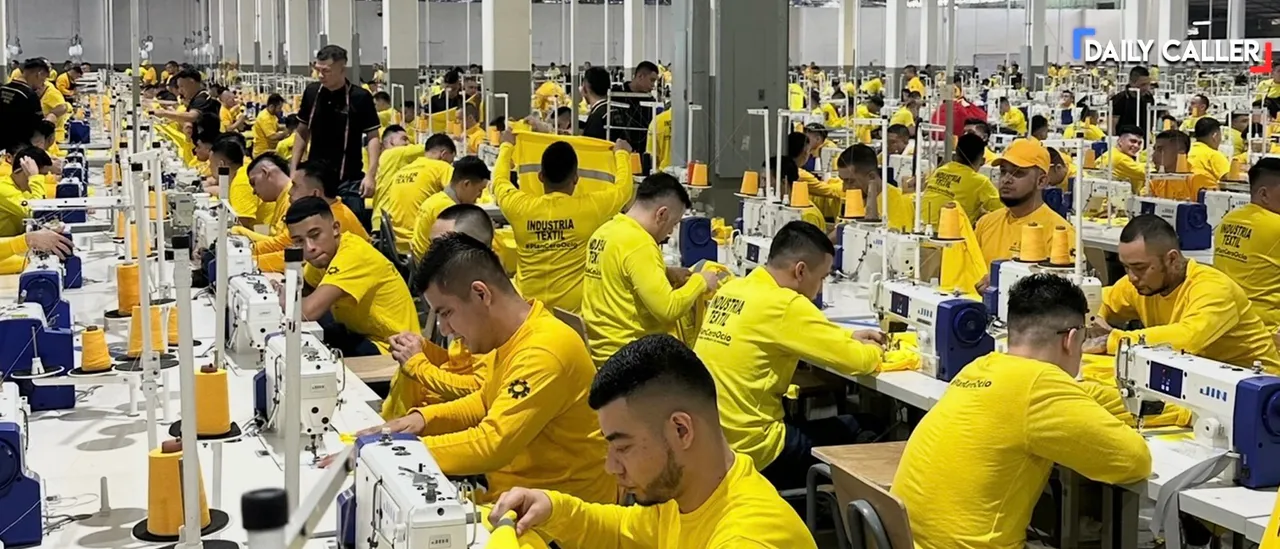
While global media focuses on CECOT, the mega-prison used to house gang members — admittedly compelling television — the impact on everyday Salvadorans is less dramatic but more tangible. They see prisoners in yellow uniforms rebuilding schools, cleaning public squares, and improving their communities. (RELATED: My Exclusive Interviews With El Salvador’s Most Dangerous Criminals)
That is because punishment in El Salvador is not always confined to a prison cell.
Nonviolent offenders can reduce their sentences by working, with every two days of labor shaving a day off their time. Many of those inmates are sent to Santa Ana Penal Industrial Farm, a low-security, open-air prison built around one motto: Cero Ocio — “Zero Idleness.”
The prison is almost entirely self-sustaining. Under the supervision of fellow inmates and only a handful of guards, prisoners farm crops, raise livestock and poultry, catch fish, and prepare their own meals.
During my afternoon tour, I ate a three-course meal prepared entirely by inmates, admired impressive oil paintings of St. Michael the Archangel slaying Satan, lost a chess match to a member of the prison’s award-winning team, and even milked one of the prison’s cows.
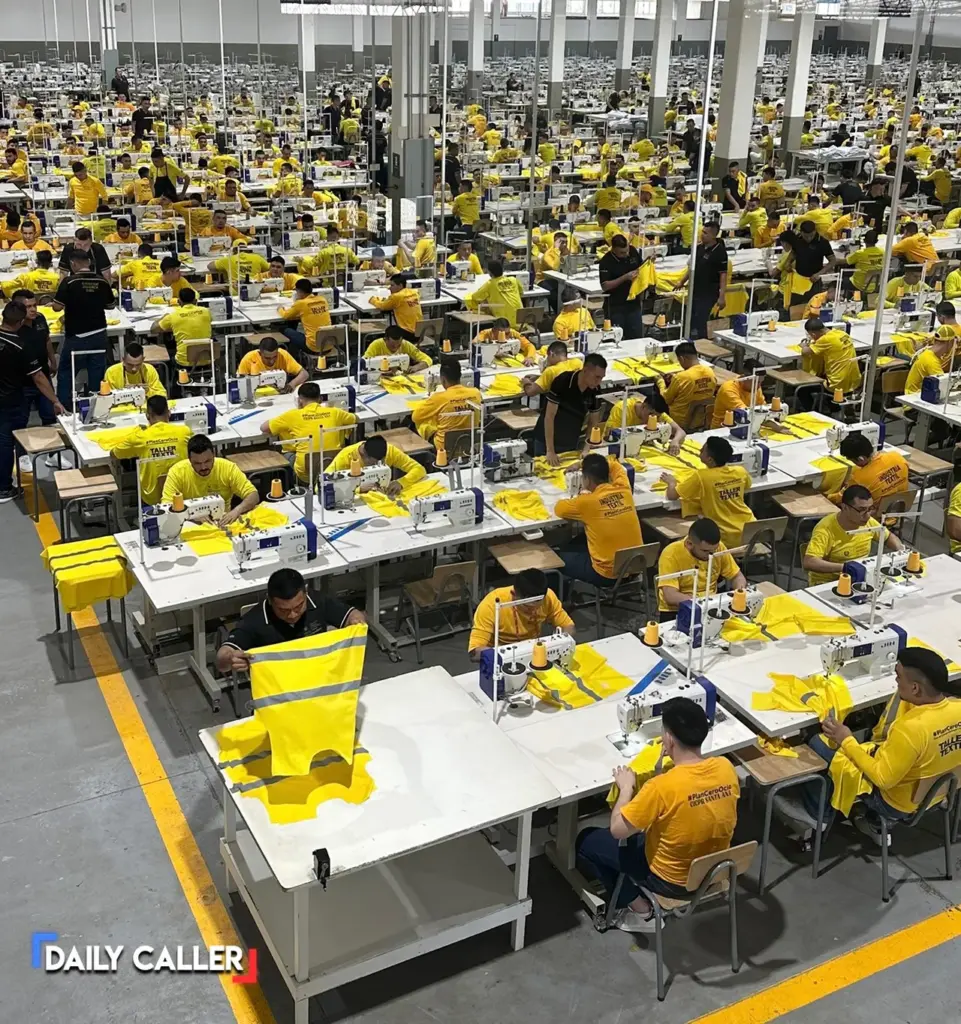
Some inmates simply helped maintain the prison itself, but many worked on projects that served the rest of the country. Inside one massive textile factory, inmates produced clothing for prisoners, police officers, and schoolchildren. As one shift ended, another immediately took its place, keeping the factory running around the clock.
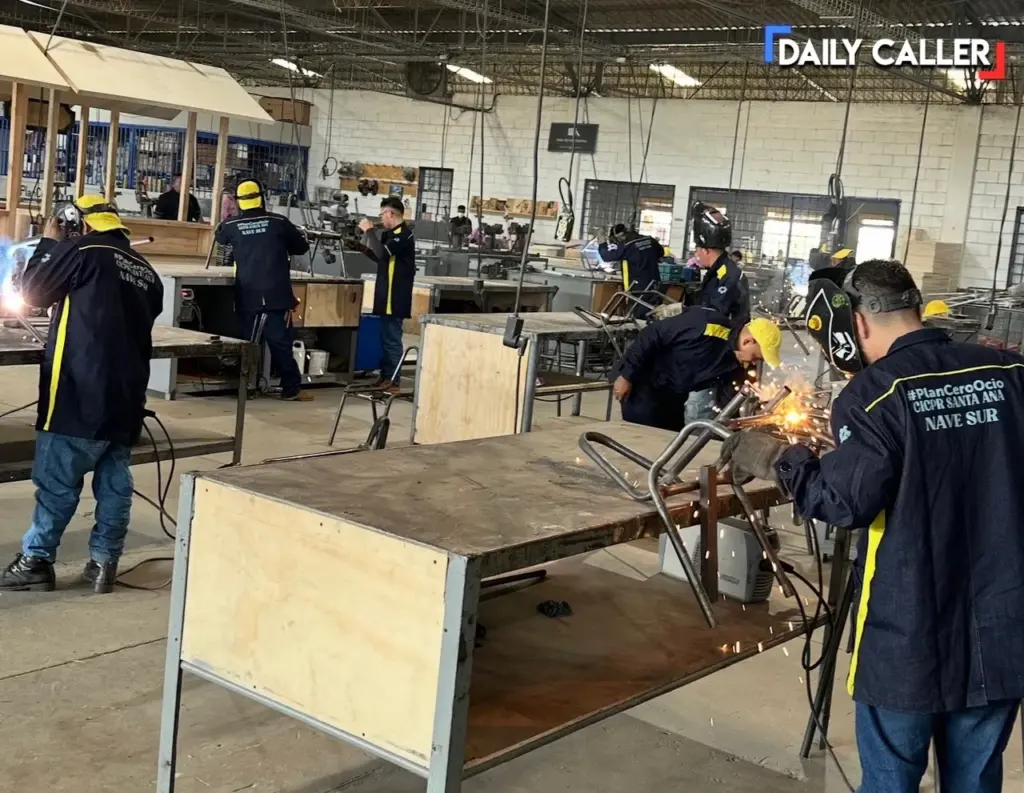
Elsewhere, inmates operated heavy-duty woodworking and metalworking equipment that would make any other warden nervous. They built school desks, playground equipment, and other materials that would be distributed across the country.
I spoke with prisoners throughout the day, often at random. Nearly all said they were grateful for the chance to serve their communities while learning skills they could use after their release. Eventually, I began to wonder whether they had been coached.
Later, when I found myself alone with one inmate and the whine of buzz saws and blowtorches drowned out our conversation, I asked him directly whether everyone was simply repeating what they had been told to say.
He laughed.
Prison was still prison, he admitted. But the gratitude I had been hearing, he insisted, was genuine.
Many inmates remained inside the compound, while others worked on projects across the country. Some were helping build a Christmas village in San Salvador’s historic district; many more were renovating schools.
Bukele’s administration has set a goal of rebuilding two schools every day.
I visited one school still under construction and another that had just been completed.
The transformation was obvious. Children studied and played on equipment bearing the prison’s logo. One little girl, mistaking me for the president, smiled and told me the school was now “beautiful.”
But the more consequential change was visible in the parents.
When gangs controlled these neighborhoods, they said, fathers were often too afraid to walk their children to school for fear of encountering MS-13 or Barrio 18. Many mothers kept their children home.
“In my case, I have older children. They’ve already studied here, too, and for me, it used to be a problem going out with them. But now, thanks to everything that’s being done, we can go out with them without worry,” one mother told me while picking up her child.
Another woman had fled El Salvador after high school and only recently returned after hearing the country had changed.
She said she once felt like “a little ant walking on the street” and regularly witnessed people being stabbed on her way to school.
“I was always afraid. I still have nightmares of blood because of that,” she said. “But now it’s wonderful. It’s so wonderful.”
The changes extended beyond the schools.
Street vendors that once clogged downtown San Salvador had been relocated to shopping centers, making the capital easier to navigate. More striking was what I saw after dark: children playing unattended in the central plaza at 9 p.m. on a school night.
“They can stay until the early hours of the morning. There’s no problem here,” one woman told me after I remarked that such a scene would be almost unimaginable in Washington, D.C. (RELATED: How El Salvador Beat The Gang Problem America Still Can’t Control)
“At three in the morning, at four in the morning, they can walk around here,” her husband added. “There is no problem throughout El Salvador today.”
However, there is still more work to do. The population centers of the capital are safe and clean, but as you head away from the city, tents and shops in the streets look less well-kept.
The country and its people still struggle financially; while they no longer worry about getting shot on the way to work, the median annual salary is a mere $3,600, according to Wage.is.
El Salvador is working to improve the financial situation by securing more than $1 billion in investments to develop key areas in San Salvador and Surf City.
“We want to become that country you fall in love with when you visit it … and afterward you think: why not invest in that person or that country? And then, why not think about living in that country?” Minister of Tourism Morena Valdez told me.
El Salvador is still trying to find its economic footing, but the progress is evident. Tourism has doubled its share of the country’s gross domestic product as the government works toward its goal of attracting 5 million visitors annually by 2030.
Vice President Félix Ulloa acknowledged that much work remained.
“We have the war against the gangs nearly won,” he said. “Now it’s on us to construct.”
If you want to learn more, watch the new Daily Caller documentary “Inside CECOT: The World’s Most Dangerous Prison.”
Read more Minnesota Attorney General Keith Ellison Heckled At Democratic Party Rally












Post Comment