Air Force Awarded Nearly $750,000 For AI-Powered DEI Training Tool Under Biden
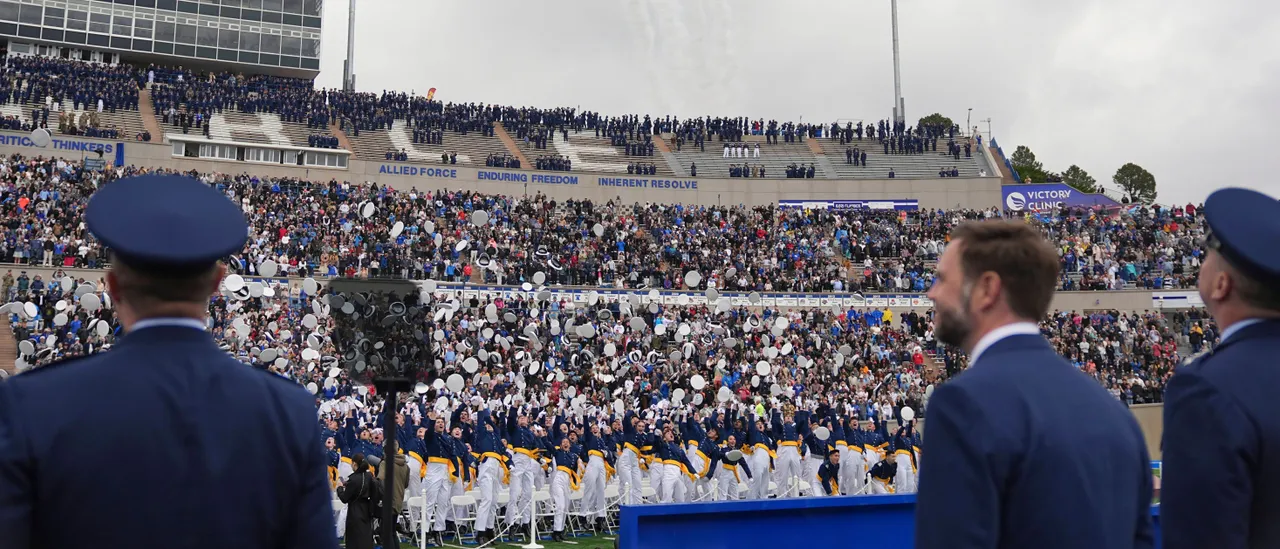
The Biden-era Air Force awarded nearly $750,000 to develop an artificial intelligence-powered virtual reality simulator for Air Force Academy cadets to practice conversations involving diversity, equity and inclusion, internal records show.
Read more Philadelphia District Attorney Larry Krasner Says He Wants To ‘Blow Up’ White House Ballroom
Smarter Reality LLC was awarded the contract to develop the simulator for the Air Force Academy, according to obtained by the Functional Government Initiative (FGI). Dubbed the “Conflict Resolution Simulator,” the program was designed to combine virtual reality, natural language processing, voice recognition and AI to allow cadets to rehearse conversations with a virtual companion.
FGI obtained the records through a Freedom of Information Act (FOIA) request and criticized the project as evidence that the Biden administration placed progressive priorities ahead of military readiness.
The Air Force Research Laboratory (AFRL) awarded Smarter Reality LLCcontract FA864922P1122 on July 20, 2022, for $749,895. The federal government’s USAspending database also identifies the award to Smarter Reality.
The U.S. Air Force did not provide comment in time for publication. Smarter Reality did not respond to a request for comment. (EXCLUSIVE: Unearthed Data Sheds Light On Military’s Transgenderism Explosion Under Biden)
“Cadets and junior personnel struggle conducting difficult conversations related to honor, diversity and inclusion and leadership and discipline,” an states.
Existing role-playing exercises were “insufficient practice for rising leaders to lead the diverse force of the future,” according to the records.
Photo by PETRAS MALUKAS/AFP via Getty Images
The proposal itself was titled “Conflict Resolution Simulator: Empowering Rising USAF Leaders with an AI-Enabled Virtual Reality Simulation to Practice Difficult Conversations (Mentoring, Diversity and Inclusion, Honor),” according to an Air Force evaluation document.
Smarter Reality described the simulator as a conversation trainer for practicing “mission-essential conversations” involving leadership, discipline, diversity, equity and inclusion, and honor, according to Smarter Reality work-plan material in the internal records. The virtual companion could respond to spoken input and change its behavior based on factors including the user’s attitude, conversational choices and the character’s background.
The system would also display the virtual character’s facial expressions and body language. After completing a scenario, users could review their choices and analytics before replaying the conversation and experimenting with different approaches.
The project was designed to support the Air Force Academy’s honor training and use realistic conversations “focused on honor but extensible to leadership and DEI,” according to the internal documents.
Read more Enes Kanter Freedom Banned From Sky Arena Over ‘Potential To Be A Threat’
Then-Air Force Academy Superintendent Lt. Gen. Richard Clark also backed the concept, according to an included in the records.
“The [Simulator] provides the Center for Character and Leadership Development with a dialogue driven trainer that uses a blend of virtual reality, natural language processing and voice recognition,” Clark said, according to an academy slideshow in the documents.
Photo by TIMOTHY A. CLARY / AFP via Getty Images
An “alpha” version of the simulator had been digitally provided to the Air Force Academy using the Academy’s Oculus virtual reality headset, Smarter Reality reported on Feb. 9, 2023, according to the records.
Academy representatives were able to use the headset and experience the simulation, according to the company.
Images included in the records show virtual cadet avatars inside a simulated Air Force Academy gym, along with a virtual office environment.
The contract included a series of milestones leading toward a final prototype. Smarter Reality was tasked with building the user interface, natural language processing system, virtual reality environment and initial scenario before delivering playable and alpha versions of the simulator.
The company was also expected to train up to three Air Force users on the system.
The project’s testing goals included demonstrating the prototype to 40 cadets serving as Character and Honor Liaisons and recruiting at least five Character and Honor Leaders as hands-on testers. The project also called for at least three product discovery or design sessions involving cadets and instructors.
The available records do not make clear how many cadets ultimately used the simulator, whether the final prototype was delivered and accepted, or whether the program remains in use.
The records also do not establish how much of the approximately $750,000 award was ultimately paid to Smarter Reality. USAspending.gov reports $0 in outlays and flags the award as not linked to a federal account, which FGI characterized as a known Defense Department financial-data reporting gap. FGI said the records do not establish final payment.
Read more Therapy Center Owner Accused Of Using Dead Shrink’s Credentials, Committing Medicaid Fraud












Post Comment