
Moving Furniture Out of a Multi-Story Hawaii Home
Furniture removal becomes considerably more demanding when a home extends across several levels. A large sectional may need to pass through a tight staircase, a bedroom set can require careful maneuvering around landings, and a heavy cabinet may be difficult to move even before it reaches the first floor.
For homeowners planning a local relocation, https://hawaiimovingservices.com/ can be useful when exploring professional moving assistance and preparing for a property with challenging access.
Start With the Furniture Route
Movers need to consider more than the furniture itself. The route from each room to the vehicle can determine how a piece should be handled.
Staircases, hallways, landings, doorways, railings, exterior steps, gates, and parking areas can all influence the moving strategy.
Identify the Difficult Pieces First
Large wardrobes, king-size beds, solid-wood cabinets, oversized sofas, dining tables, and heavy appliances deserve attention before ordinary boxes.
Their dimensions and weight may determine which route the crew uses and whether particular preparation is necessary.
Measure Stairways and Doorways
A piece can fit perfectly inside a room and still become difficult to remove.
The crew may need to consider doorway width, staircase clearance, ceiling height, landing dimensions, and the position of railings.
Shape Matters as Much as Size
A long sofa may need to be rotated at a staircase landing, while a tall cabinet may require a completely different carrying angle.
The shape of the item can therefore be just as important as its measurements.
Decide Which Furniture Can Be Disassembled
Some furniture becomes substantially easier to handle after suitable components are removed.
Bed frames, table legs, shelving systems, modular sofas, and certain cabinets may be partially dismantled when their construction permits it.
Keep Hardware With the Furniture
Once a piece has been taken apart, screws, brackets, bolts, and connectors should be kept together and labeled.
This makes reassembly at the destination much easier, especially when several pieces use similar hardware.
Protect the Interior During Removal
Furniture moving through several floors can come close to walls, railings, floors, and door frames.
Protective materials can help reduce the chance of marks or scratches while large possessions are maneuvered through restricted spaces.
Give Tight Corners Extra Attention
Staircase turns are often among the most difficult sections of the route. Large furniture should be positioned carefully rather than moved quickly through a confined area.
A controlled approach can help protect both the furniture and the property.
Account for Heavy Furniture
Weight becomes particularly important when an item must travel down multiple flights of stairs.
A relatively compact safe, appliance, or solid cabinet can require more planning than a much larger lightweight sofa.
This is one reason local relocation planning should consider individual furniture pieces rather than estimating the job only by the number of rooms.
Prepare the Stairway Before Moving Day
Homeowners can make the route easier by removing unnecessary objects from stairs and landings.
Loose rugs, decorations, boxes, children’s belongings, and other obstacles can reduce the available maneuvering space.
A clear staircase allows the crew to focus on handling the furniture rather than navigating around household clutter.
Consider the Route Outside the Home
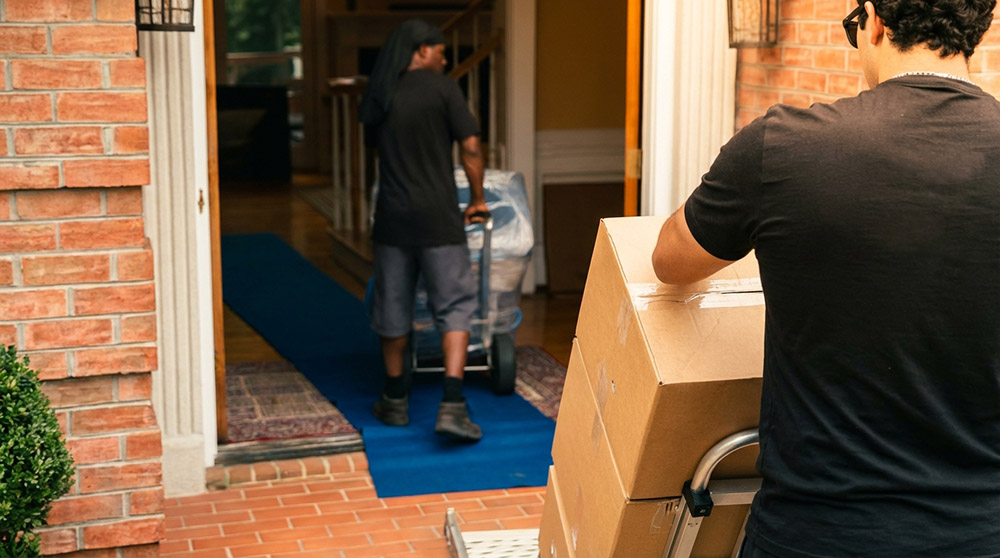
Reaching the ground floor is only one part of the process.
Furniture may still have to travel across steps, slopes, narrow paths, gates, or other outdoor areas before reaching the moving vehicle.
Think About Truck Position
If the vehicle cannot park directly beside the entrance, large pieces may have to be carried farther outdoors.
Customers should mention limited parking or unusually long carrying distances before the scheduled move so these conditions can be considered in advance.
Building Rules Can Affect the Move
Multi-story residences can include condominiums and apartment buildings with additional requirements.
Elevator reservations, designated loading areas, restricted moving hours, security procedures, and parking rules can all affect how furniture leaves the property.
Check Elevator Availability
An elevator may offer an alternative to stairs, but its dimensions and weight limits still need to be suitable for the furniture being moved.
If elevator use is restricted, the crew needs to know before arriving.
Consider the Destination Floors Too
The delivery property may create similar challenges. If furniture is going into an upstairs bedroom or another multi-level area, the destination route should also be considered.
Clear room labels can help movers determine where major furniture pieces belong and avoid unnecessary movement after delivery.
For homeowners comparing Local Moving Hawaii options, https://hawaiimovingservices.com/local-moving-hawaii/ provides information about local relocation services and the handling of residential and commercial moves across Hawaii.
Turning Multiple Floors Into a Planned Move
A multi-story Hawaii residence does not automatically make furniture relocation impractical. The key is to understand the complete route before large items start moving.
When the crew knows which furniture is oversized, how many floors are involved, where the tightest access points are, and where the vehicle can be positioned, the job becomes a sequence of planned movements rather than improvised decisions.
For families arranging Local Moving Hawaii services, providing accurate information about stairs, furniture dimensions, elevators, exterior access, and destination rooms can make moving day considerably more predictable. The largest pieces can receive attention first, while the remainder of the household follows an organized loading sequence.














3 comments