Iran Offers Trump An Off-Ramp As US, Tehran Trade Strikes
Iran urged the United States to return to a June interim agreement Tuesday, offering to reciprocate even as President Donald Trump threatened additional strikes after Tehran fired missiles at American forces in Jordan.
Read more What Is Rep. Thomas Massie’s The Epstein Files Transparency Act II?
The renewed diplomatic signal came days after the first direct U.S.-Iran military hostilities in more than a month, raising the possibility that the six-month conflict could again shift from economic pressure back toward sustained combat. Tehran and Washington have both indicated they do not want a return to full-scale war, but each has also threatened retaliation if attacked again, Reuters reported.
“Unfortunately, this is a fantastic opening for Iran itself, not for the United States. As many commentators have noted, the terms of the June MOU were extremely favorable to Iran,” Ian Ralby, a maritime security expert and president of the international affairs nonprofit Auxilium Worldwide, told the Daily Caller News Foundation. “It established a mission for the Iranian navy, which the U.S. claims is already destroyed. It created the opening for the possible management and control of the Strait by a joint Iranian-Omani agreement, which would be counter to global economic interests and to the fundamental principles of international maritime commerce and law.”
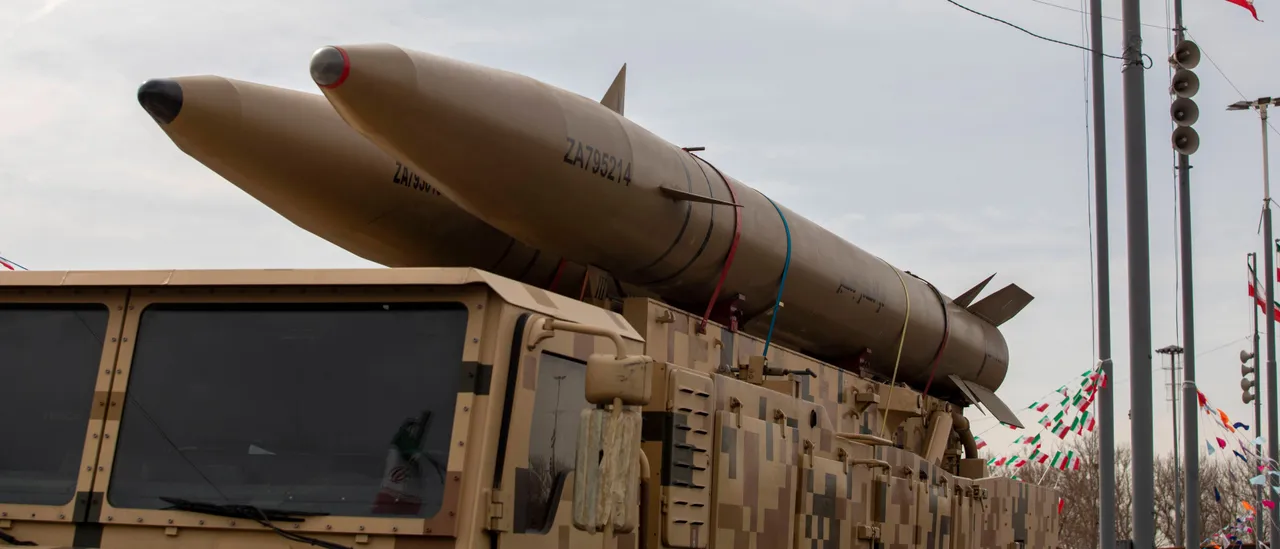
U.S. forces resumed strikes against Iran Sunday after Islamic Revolutionary Guard Corps (IRGC) personnel were observed preparing to launch rockets carrying sea mines into the Strait of Hormuz, hitting two Iranian launchers on Larak Island, according to U.S. Central Command (CENTCOM) spokesman Navy Capt. Tim Hawkins.
Iran responded hours later with ballistic missiles and drones aimed at King Hussein and Al-Azraq air bases in Jordan, the IRGC-linked Tasnim News Agency reported. Most of the missiles were intercepted, and there were no significant impacts, Fox News reported.
Iranian President Masoud Pezeshkian said Tehran would “immediately reciprocate” if Washington returned to its commitments under a Memorandum of Understanding (MOU) signed in June, Reuters reported, citing Iranian state media. (RELATED: Trump Insists He Will Never Nuke Iran Despite His Own Pentagon Reportedly Saying They Were Considering It)
The Pentagon referred to CENTCOM. CENTCOM declined to comment, citing operational security reasons.
The MOU declared an end to fighting and was intended to open a 60-day negotiating period, but the talks expired without a broader settlement and disputes over implementation quickly undermined the arrangement.
“Whether the strikes are limited or extensive, there is an ongoing international armed conflict between the two states, as the prolonged hostilities between the two indicate that this situation is not over,” Ralby told the DCNF. “Whether a bullet a day, a bullet a week, or a million bullets an hour are fired, the state of armed conflict remains. The stability of the region is continuing to decline because even as direct hostilities have been more limited, the expansion of critical security threats, particularly in the maritime space, has expanded.”
The Iran War had cost U.S. taxpayers an estimated $103.3 billion through late June, according to a July analysis by defense spending researcher Stephen Semler.
The Iran War has killed 18 U.S. service members and wounded 759, according to the Pentagon’s Defense Casualty Analysis System, which divides casualties from the conflict between two separate categories. The Pentagon lists 14 deaths and 417 wounded under Operation Epic Fury, while casualties recorded beginning July 7 are tracked separately under Overseas Operations.
The Iran War is in no country’s interest, and Tehran remains open to a negotiated solution, Pezeshkian said Monday while attending the Shanghai Cooperation Organisation (SCO) summit in Bishkek, Kyrgyzstan, Reuters reported. The SCO is a China- and Russia-led Eurasian political and security bloc whose members also include Iran, India and Pakistan.
Trump, however, warned Monday that the United States would retaliate for Iran’s latest attacks and again appeared to threaten Kharg Island, posting AI-generated videos on Truth Social depicting explosions at Iran’s primary oil export hub “being blown to smithereens!!!”
The White House did not respond to a request for comment.
An invasion of Kharg Island could prove to be a disaster for the U.S. military should it decide to put boots on the ground, given that the island is within artillery range of the Iranian mainland. (RELATED: A Kharg Island Invasion Is A Disaster Waiting To Happen)
“We’re going to hit them hard,” Trump told Fox News in a phone interview on Monday. “There will be a response.”
Read more Canada Makes Bizarre US Trade Talk Demand: No More Memes
“It is highly likely that the exchanges will remain limited in scope,” Mehrzad Boroujerdi, an Iran expert and professor of political science at the University of Science and Technology, told the DCNF. “However, the Iranian leadership has made clear that it intends to respond to each attack with a counterstrike. As a result, tit-for-tat exchanges could become the norm in the absence of a willingness on either side to address their differences through diplomacy.”
The strike marked the first publicly reported American attack on Iranian military positions since late July, bringing an end to a period in which Washington had increasingly leaned on sanctions and other financial pressureover direct military action, according to Reuters.
“The U.S. may try to erode Iran’s regime’s capabilities to threaten the Strait of Hormuz,” Jason Brodsky, policy director at United Against Nuclear Iran, told the DCNF. “As we’ve seen in the past, that does not necessarily mean this is going to result in escalation beyond the current dynamics between both sides. I believe we will be in this limbo period of increasing economic pressure with occasional, calibrated U.S. military strikes for the foreseeable future. As the economic situation in Iran deteriorates, that may cause the regime to lash out. The U.S. must be prepared for that eventuality.”
The Strait of Hormuz remains one of the central pressure points in the conflict. Iran has said it will restore free navigation through the waterway only if Washington implements the June agreement, Reuters reported.
Unknown projectiles struck two supertankers carrying Saudi crude as they sailed outbound through the Strait of Hormuz Monday, Reuters reported, citing shipping intelligence and tracking firms Marisks and Kpler.
The renewed fighting has already rattled energy markets. Brent crude climbed more than 2% Tuesday as traders weighed the possibility of further disruptions to Middle Eastern oil supplies, according to the CNBC market tracker.
American motorists have also felt the effects at the pump. The national average for regular gasoline stood at $2.983 per gallon on Feb. 26, climbing to $4.095 per gallon as of Sept. 1, roughly $1.11, or 37%, higher than immediately before the war, according to AAA.
Washington is simultaneously expanding its campaign to economically isolate Tehran.
The Treasury Department launched “Operation Economic Outcast” Aug. 24, targeting Iranian financial, shipping, technology, aviation, gold and digital-asset networks while warning foreign governments and companies against continuing economic ties with Tehran, according to the Treasury Department.
Treasury Secretary Scott Bessent said the administration intends to tighten pressure until Iran faces a choice between international isolation and a return to economic normalization, according to the Treasury Department.
Iranian officials have publicly acknowledged mounting economic difficulties, but Central Bank Governor Abdolnaser Hemmati said Tuesday that Tehran still has sufficient foreign currency reserves and could inject up to $2 billion into currency markets, Reuters reported, citing the IRGC-controlled Tasnim news agency.
Iran’s rial crossed 2 million to the U.S. dollar on the open market in August, Iran International reported, while annual inflation reached 66% in July, Tasnim News Agency reported, citing Iran’s Statistical Center.
“I don’t see a credible opening for renewed negotiations between the U.S. and Iran,” Arang Keshavarzian, a professor of Middle Eastern and Islamic Studies at New York University, told the DCNF. “The Trump administration still has no clear strategy and set of objectives and this makes it very difficult for those in Iran’s government who want a negotiated end to the war to argue that negotiations will be fruitful. If anything, it seems Iran is responding to U.S. military attacks more quickly and now targeting US bases on Jordan more regularly than those in the Arabian Peninsula.”













Post Comment