‘Leadership Doesn’t Know Anything Else’: Why Are Suicide Rates In US Military So High?
A 19-year-old U.S. Navy sailor aboard the USS Abraham Lincoln plunged overboard in an apparent suicide attempt Aug. 3.
He survived and is being slapped with disciplinary charges, according to charging documents assessed by MS NOW.
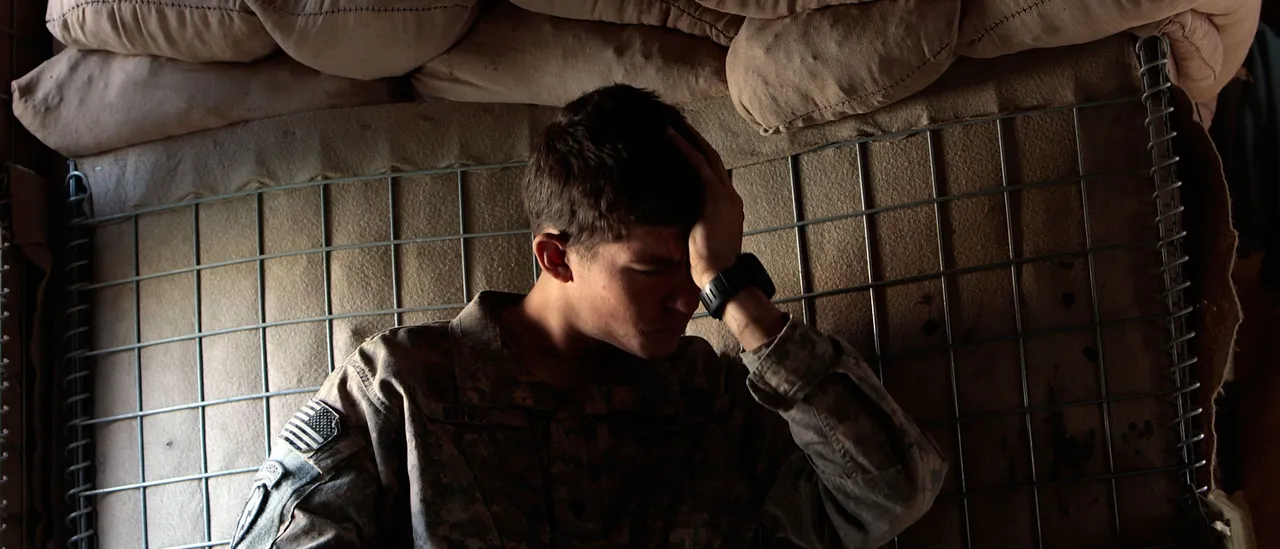
The case highlights a debate among military health experts and policy analysts: whether the military, and government in general, is paying sufficient attention to the psychological struggles of service members before they become veterans.
With the consequences of PTSD from nightmarish deployments and the psychological scars left by the wars in Iraq and Afghanistan, for years, the public conversation surrounding suicide in the armed forces centered on combat veterans. Those still wearing the uniform are also a critical part of the situation.
In 2024, 471 servicemen and women died by suicide, including 302 members of the Active Component. The Active Duty Component suicide rate was 23.8 deaths per 100,000.
And it’s not just about combat.
A 2015 study examining more than 1.3 million veterans who served during the Iraq and Afghanistan wars discovered that deployment itself was not associated with increased suicide risk. After accounting for demographics and interior military factors, combat veterans had a lower risk of suicide than nondeployed veterans.
Evidence points toward conditions of military life more broadly.
The Defense Suicide Prevention Office’s annual report found that among Active Component service members who died by suicide in 2023, 44% had documented relationship problems, 29% had legal issues, 24% had workplace difficulties, and 12% had financial challenges. Forty-two percent had at least one mental-health diagnosis, including depression, anxiety, PTSD, or alcohol-use disorder.
Read more Worldwide Indicator Flashing Red As Global Debt Deluge Spooks Investors
As one servicemember, speaking on the condition of anonymity, said, “You’re thousands of miles away from home, you’re not getting enough sleep, could be struggling with a relationship, worrying about money, and trying to figure out an entirely new lifestyle — all without taking a step on the battlefield.”
From 2020 to 2024, 560,035 active-duty service members were diagnosed with at least one mental-health disorder. Anxiety and adjustment disorders were among the most common conditions. The Pentagon’s data reveals that between 2014 and 2019, 883 active-duty Army soldiers died by suicide in contrast to 96 combat-related deaths, meaning soldiers were 9 times more likely to die by suicide than in combat.
In these high-stress environments, the quality of leadership often becomes a matter of life and death. An enlisted soldier emphasized, “When commanders view their soldiers as cogs in a machine, valuing readiness metrics over basic human needs, the psychological strain becomes extreme. The difference between a difficult assignment and an unbearable one is largely on the commander.”
The absence of empathetic leadership is usually the breaking point as a soldier explained: “Soldiers just get tired. They get tired of the 16-hour days, they get tired of the toxic leadership, they get tired of being treated as a number and not a person. They just want their humanity to be recognized. I can’t even imagine the morale boost that would come from an officer doing something as insignificant as getting their soldiers a pizza or some energy drinks.”
They went on to say that the military leadership model is deeply institutionalized, meaning new officers simply replicate the inflexible, unforgiving environments they were forged in. When basic understanding is systematically trained out of leaders, a culture of callousness becomes the default. Another anonymous service member alleged a generational gap.
“Leadership doesn’t know anything else, whether they went through West Point or basic training, they were treated the same exact way, so what else would you expect of them than to treat us like that?” they said. “Policy changes need to happen … but they are going to remain empty words on paper until non-commissioned officers and junior leaders learn to balance basic human empathy with discipline.”
Read more Iran Offers Trump An Off-Ramp As US, Tehran Trade Strikes












Post Comment