
Meet The Republicans Facing The Toughest Fights This November — And How They Plan To Keep Their Seats
Midterm elections have historically favored the party out of power, putting Republicans on the defensive as they fight to maintain their majorities in Congress. With control of the House hinging on just a handful of competitive races, vulnerable Republicans are searching for different ways to survive a difficult political environment.
Read more DOJ Just Slapped Virgin Islands With Another Complaint Over Semiauto Gun Ban
President Donald Trump’s approval is underwater, the war in Iran is weighing on voters, and affordability has emerged as the defining issue heading into November. These lawmakers are navigating some of the toughest races this November, and their campaigns have attracted the interest of National Democrats looking to retake the lower chamber on Election Day.
New York Republican Mike Lawler was first elected to Congress in 2022 and has carved out a prominent political profile as a bipartisan dealmaker while maintaining a close relationship with President Donald Trump. Lawler faced a tough reelection in 2024; he was one of only three republicans to win a House district carried by then-Vice President Kamala Harris. This year, Lawler is up for another tough fight. He is facing veteran U.S. Army officer and former national security official Cait Conely.
Conely calls herself a “proud fourth-generation Hudson Valley native from working-class roots who understands the values of hard work and public service.” (RELATED: Republicans Hope Trump’s Unprecedented Convention Can Rewrite Midterm History)
She’s attacked Lawler over his perceived closeness to the President, saying he will “do whatever Trump says.”
Lawler has walked a fine line during his congressional tenure, working to maintain a close relationship with the White House while still breaking with Republican House Leadership and the White House, most notably on the State and Local Tax (SALT) Deduction cap. SALT was widely seen as a top legislative priority among Republican and Democratic lawmakers representing New York and high-state-income-tax states in New England.
“Anyone that is betting against Mike Lawler is making a bad bet,” Putnam County Executive Kevin Byrne told the Daily Caller.
“Mike is very bipartisan and has an independent streak on a number of issues,” Byrne continued.
Lawler’s strategy appears to be resonating with at least some voters. A July Co/efficient poll found him leading Conley 50 percent to 45 percent, with the Republican holding a 15-point advantage among independent voters, who are largely seen as critical to his reelection bid.
When asked whether Lawler’s independence appeals to moderate democrats and independents in the district, Byrne said, “Absolutely, 100 percent.”
In the Sunshine State, Congresswoman Anna Paulina Luna has risen to national prominence through her online prowess and firebrand political profile, taking on government institutions, congressional leadership, and even members of her own party. Now, the two-term lawmaker is facing a serious Democratic challenge in a district where her anti-establishment brand is being put to the test.
Luna rose to prominence as the Hispanic outreach coordinator for Turning Point USA and later carried that notoriety to Congress. Despite losing the congressional race for her current seat in 2020, she returned two years later and has held the district since.
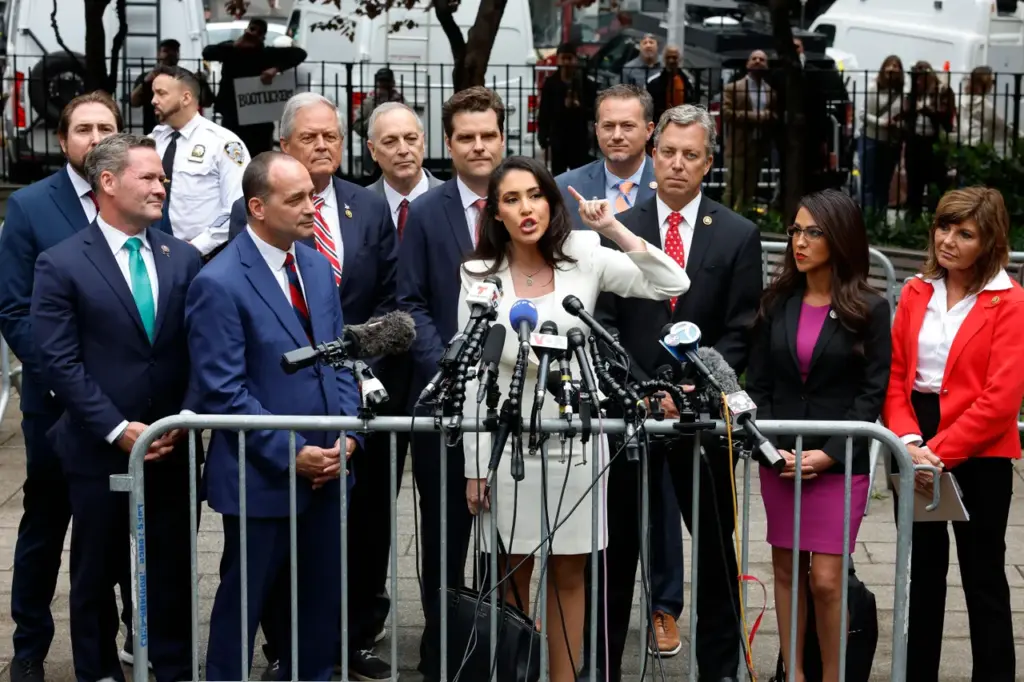
The Florida lawmaker will face Leela Gray in November, a retired Army brigadier general and lawyer who has attracted national Democratic support. The race would ordinarily be considered a long shot for Democrats given the district’s Republican tilt, but recent polling suggests Gray has at least made the contest competitive.
Luna’s greatest political strength may prove to be a vulnerability: The lawmaker has spent years cultivating a national profile as a Republican willing to fight the establishment. Now she’s working to convince voters that her combative brand is better than that of a moderate Democrat with broad appeal.
Ohio Republican Max Miller was supposed to be running for reelection in one of the safest Republican seats in the country. Instead, a bitter family dispute and a series of serious allegations have turned his race into a newfound pickup opportunity for Democrats.
Emily Moreno, Miller’s ex-wife, has accused him of domestic violence involving both herself and their daughter, allegations the Buckeye State lawmaker denies. Her father, Republican Ohio Sen. Bernie Moreno, has called on Miller to resign and end his reelection campaign.
Miller’s Democratic challenger, Brook Park City Councilman Brian Poindexter, was considered a long shot in the solidly Republican district until mounting legal and political troubles gave Democrats an opening they otherwise wouldn’t have found.
New polling shows Poindexter leading Miller 47 percent to 33 percent among likely voters, giving national Democrats enough evidence that the race could become competitive. (RELATED: What Do Trump’s 2024 Swing Voters Want From Him Now?)
Read more Kai Trump Says She’s Been Sobbing, Hasn’t Eaten For Days During College Transition
However, Poindexter has faced concerning allegations of his own — though not nearly on the level of domestic abuse. He was recently accused of swallowing a bag of cocaine during a previous traffic stop and slapping another spectator at a Cleveland Indians game after the individual made comments about how Poindexter ate a hot dog, according to the Washington Free Beacon.
The mounting allegations prompted the House Ethics Committee to open an investigation into Miller.
Miller’s biggest hurdle to reelection may be that the Republican Party itself is divided over whether he can still win the seat. While Trump has reportedly warned Miller that his reelection prospects are dim and Republican senators including Jon Husted and Tim Sheehy have urged him to step aside, House Speaker Mike Johnson has defended the Ohio lawmaker, calling him a “great member of Congress.”
For Miller, his path back to Congress might depend less on repairing his standing among his Republican colleagues in Washington than on convincing Republican voters at home that the allegations surrounding his family life should not determine his political future.
Michigan Republican Tom Barrett is facing a different kind of challenge; he’s a freshman member of Congress running in a district that was already competitive, but Barrett is hedging his bets on his easygoing persona and willingness to buck Trump to keep him on the Hill.
A former Michigan state senator and 22-year Army veteran, Barrett won the seat in 2024 after losing a 2022 bid to now-Sen. Elissa Slotkin.

This time around, he’s facing progressive organizer Will Lawrence, who emerged from a crowded Democratic primary in August and is being backed by national Democrats as they target the seat. The race is already considered a toss-up, with recent Democratic-aligned polling showing Lawrence holding a narrow advantage over Barrett.
“It’s a 50-50 seat. There’s no two ways about it,” Jason Roe, a political advisor for the Congressman, told the Caller.
Nonetheless, Roe emphasized the inroads the Congressman has made in the district and the lawmaker’s charm, saying, “I think one of the secrets to his success is he’s just such a likable guy.”
Barrett has increasingly leaned into his independence from Trump, backing a War Powers Resolution led by Democrats in the lower chamber. The freshman member has also carved out his own position in the growing fight over data centers, arguing that local communities should have the final say on where the facilities are built, despite having previously supported the technology.
The freshman congressman recently introduced legislation to protect local zoning authority over data centers, even as President Donald Trump has emerged as one of the industry’s most vocal defenders.
“Will Lawrence, while a very good progressive organizer, is a very flawed general election candidate,” Roe told the Caller.
The progressive activist rose to prominence as the co-founder of the Sunrise Movement, a progressive climate organization. Lawrence was arrested in 2013 after chaining himself to the Enbridge Line 5 pipeline site.
Nonetheless, Lawrence is betting that a national Democratic environment, along with his progressive economic message, can overcome the conventional wisdom that his politics make him a difficult candidate for a swing district. Democratic leaders and other Democrats have questioned his electability, while Lawrence has embraced the criticism and made issues such as affordability, corporate power, and data centers central to his campaign.
This ragtag group of Republican lawmakers, facing some of the toughest races this November, highlights the wide-ranging approaches campaigns are taking in the midterm elections. Candidates are looking for creative ways to hold onto their seats during an election year widely seen as advantageous for Democratic candidates across the country.
Ultimately, they will have to convince voters to look beyond the national political environment and give individual Republicans another term. Whether they can do so will determine whether some of the party’s most vulnerable members can survive past November.
Read more Democrats Look To Use Data Centers As Political Football In Midterm Dogfight














Post Comment