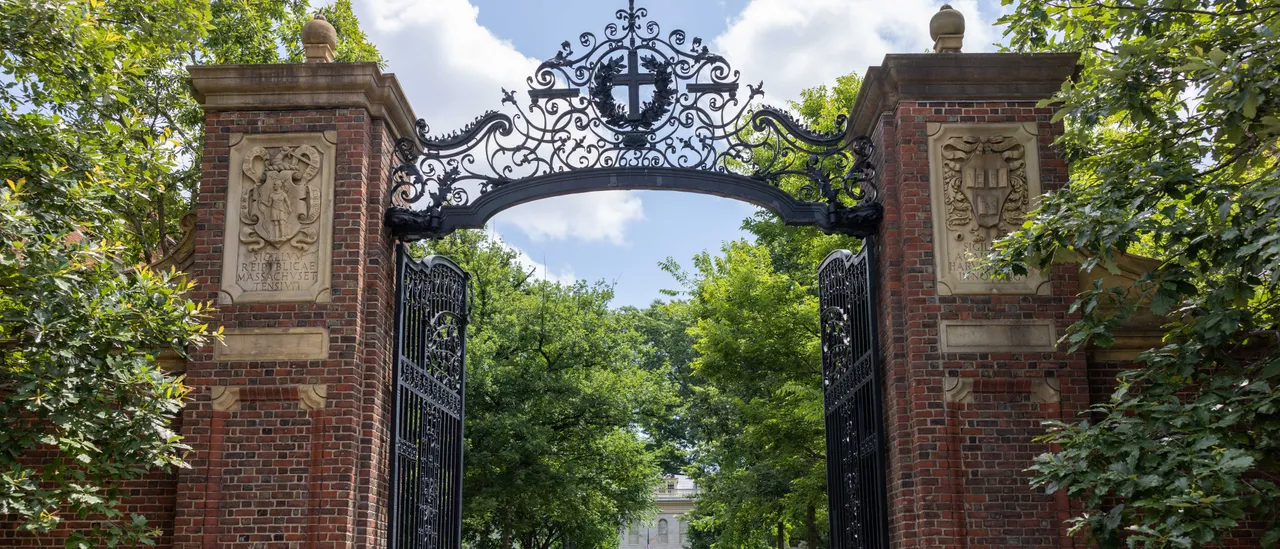
Colleges Are At Risk Of Closing. Good.
“You’ll own nothing, and you’ll be happy” is an increasingly fitting description of the American college graduate. While that World Economic Forum slogan is rightly mocked for its managerial creepiness, jokes aside, the average student nowadays is surely more nihilistic about the world than previous generations.
Read more NYC Hate Crimes Skyrocketed By 15.8% In Past Year, NYPD States
The economic bargain of college, however, is looking increasingly difficult to justify. Sure, we’ve all seen the statistics about graduates earning more on average, but the more shocking fact is that college graduates are making up a growing share of the long-term unemployed: “There are simply more college graduates today than there were 10 years ago, and the job market for people without college degrees improved, reducing their share of long-term unemployed,” journalist Noam Scheiber writes.
There is also the reality that “the 21st century may no longer favor college graduates,” at least according to the Federal Reserve Bank of Cleveland. And AI threatens to accelerate that trend, potentially eliminating or radically reshaping many of the white-collar jobs that college graduates spent years — and often hundreds of thousands of dollars — preparing to enter.
And how are some of America’s most prestigious universities responding to this upheaval? By finding new ways to monetize it. In fact, Harvard recently announced that it will be selling access to a “bootcamp” course at their coveted Business School that includes AI clones of faculty for the low price of $699 per class.
Over the past few decades, the college campus has become more akin to a summer camp than a bastion of higher learning. Universities being labeled as “Jacuzzi U.” was already a comical rejoinder more than two decades ago due to the amenities arms race. And it hasn’t slowed down. The “country club” model for attracting deep-pocketed students has seen universities like Vanderbilt — a private university based in Nashville — take advantage by opening expansions in places like New York City, West Palm Beach, and San Francisco.
But then there are examples like Syracuse, Northeastern, Boston University, and NYU. These sub-Ivy Elite schools have seen dropping enrollment, forcing deans and administrators to tighten budgets. Another recent analysis found that almost a third of the nation’s private, nonprofit colleges could be closing their doors in the next ten years.
“Essentially, the problem is we have too many seats in too many classrooms and not enough prospective students to fill them,” Peter Stokes, a director at Huron Consulting Group, which conducted the report that found higher education is on the “cusp of financial exigency.”
But may I suggest that colleges closing down is actually a good thing. Colleges have failed students. Colleges have failed America.
Read more Local Mom Dragged Into Court For Trying To Obtain Info On Secret Data Center Deals
Colleges were supposed to be the promise of “Veritas,” as the Harvard University slogan goes, but instead they offered courses on “Street Dance Activism” and “Chocolate, Culture, and the Politics of Food.”
Colleges were supposed to honor the pursuit of knowledge, as Columbia’s motto puts it: In lumine tuo videbimus lumen. However, campus culture is about the culture wars, and any opinion not in line with the progressive orthodoxy is dutifully stamped out.
Thomas Jefferson wrote to John Adams in 1813 that education would lead to a “moral respectability” in our republic and give rise to a “natural aristocracy” to shepherd “the instruction, the trusts, and government of society.” But instead, our institutions of higher learning have given themselves over not to the “artificial aristocracy” of Jefferson’s distaste, but to one of a different kind of hierarchy built on a false foundation of “diversity, equity, and inclusion.”
The old education regime is now recognized in all its naked, decrepit form. Their weakening grip on the American psyche has started to atrophy. Maybe, just maybe, they can finally be laid to rest. And in their place, a return to form can be marshaled. “This is not an easy task,” as philosopher Leo Strauss , but a return is necessary for supplying those who truly pursue the truth with the “experience in things beautiful.”
Cameron Abrams is a policy analyst for Next Generation Texas at the Texas Public Policy Foundation. After graduating with a bachelor’s degree in Psychology from Tabor College, Cameron completed a master’s degree from University of the Pacific.
The views and opinions expressed in this commentary are those of the author and do not reflect the official position of the Daily Caller.
Read more Trump Pardons Sailor Sentenced To 20 Years Over Toy Firearms











Post Comment