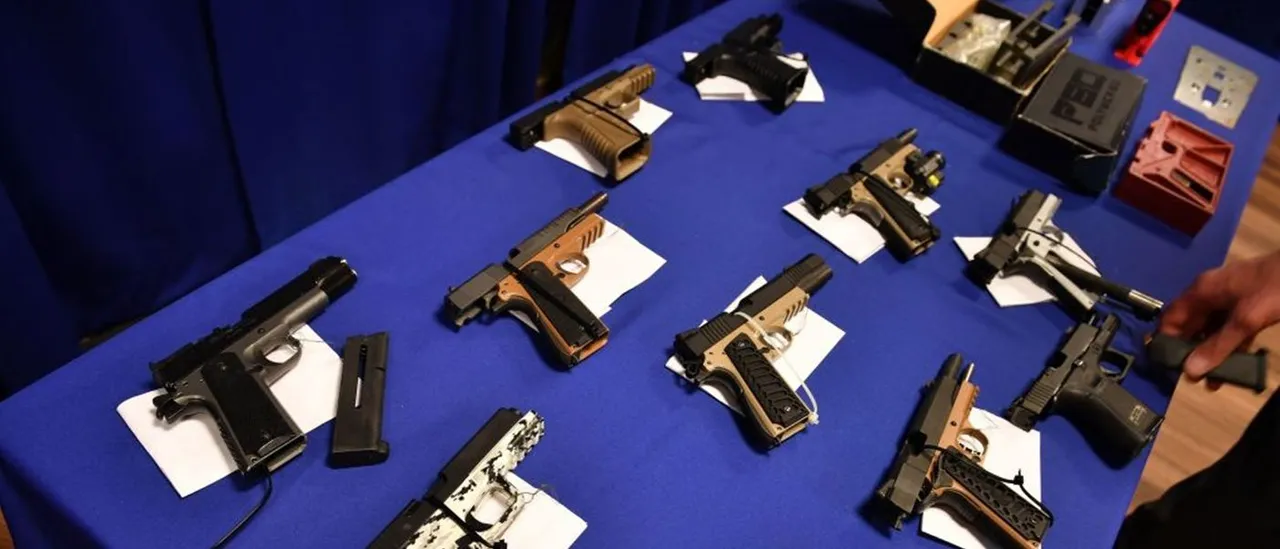
Judge Takes Axe To Delaware’s ‘Ghost Gun’ Ban
A federal judge ruled Delaware’s ban on so-called “ghost guns” unconstitutional Thursday, the latest victory for Second Amendment advocates in court.
Read more Houthi Territory Gains Threaten To Choke Off Saudi Oil, As Trump Refuses Call For Strikes
Several states passed laws targeting partially completed firearms or receivers after anti-Second Amendment organizations labeled them “ghost guns,” while the Biden administration sought to classify them as firearms. In a ruling issued Thursday, United States District Judge Maryellen Noreika of the District of Delaware, a Trump appointee, said Delaware’s ban violated the Second Amendment. (RELATED: Survey Spells Bad News For Anti-Gunners)
“The Possession Ban targets (1) untraceable firearms and (2) firearm frames or receivers that do not have the manufacturer’s name and an individualized serial number on them or on a major component of the firearm into which the frame or receiver will be housed,” Norieka wrote. “An untraceable firearm is an Arm under the Second Amendment. It is, after all, a firearm, and even under the narrowest reading of ‘Arms,’ ‘all firearms constitute [] ‘arms,’’ whether serialized or not. Moreover, the evidence here shows that untraceable firearms are customarily used for offensive or defensive purposes such as self-defense.”
“Firearm frames and receivers are likewise ‘Arms’ under the Second Amendment,” Norieka continued. “To start, under federal law, the term ‘‘firearm’ includes [] ‘the frame or receiver’’ of any gun. That indicates that unfinished frames and receivers are not functionally different from firearms and enjoy the same Second Amendment protections. Moreover, a frame or receiver is ‘necessary for [] a gun to function as intended,’ so in this Circuit, a frame or receiver constitutes an ‘Arm’ under the Second Amendment.”
Read more FOIA Records Appear To Reveal Kash Patel’s Priority Is Tracking Down His Critics
The Biden administration’s regulations were initially upheld by the Supreme Court in a 7-2 in 2025 because they were similar to certain restrictions on the First Amendment, with Chief Justice John Roberts and Associate Justices Amy Coney Barrett, Neil Gorsuch and Brett Kavanaugh joining the three liberal justices to keep the regulations in place. However, efforts targeting the so-called “ghost guns” have had legal setbacks.
Chief United States District Judge Reed O’Connor of the Northern District of Texas, a George W. Bush appointee, issued a Aug.17 in favor of Defense Distributed, accepting arguments that the “frame or receiver rule” enacted by the Bureau of Alcohol, Tobacco, Firearms and Explosives (ATF) was unconstitutional on both Fifth Amendment and Second Amendment grounds.
A three-judge panel from the United States Court of Appeals for the Ninth Circuit on Aug. 21 that a lawsuit brought by Democratic California Attorney General Rob Bonta and Giffords Law Center against the Bureau of Alcohol, Tobacco, Firearms and Explosives (ATF) demanding tighter regulations on so-called “ghost guns” should be dismissed for lack of standing.
Read more Summer 2026 Breaks All-Time Record For Hottest Ever In United States








Post Comment