Co-Founder At Center Of Pentagon Feud Helps Shape Vatican AI Guidance
The artificial intelligence company Anthropic is suing the Trump administration while its co-founder, Christopher Olah, is scheduled to speak at the Vatican on the topic of Artificial Intelligence (AI).
Read more Parents Revolt After College Tries Surveillance Experiment On Kids, Report Shows
A Washington, D.C., federal appeals court heard arguments from the Department of War (DOW) and Anthropic on Tuesday following the company’s blacklisting by the DOW, which made its product no longer marketable to defense contractors, according to CNBC. (RELATED: US Official Denies Iran’s Claim That Oil Sanctions Are Being Lifted)
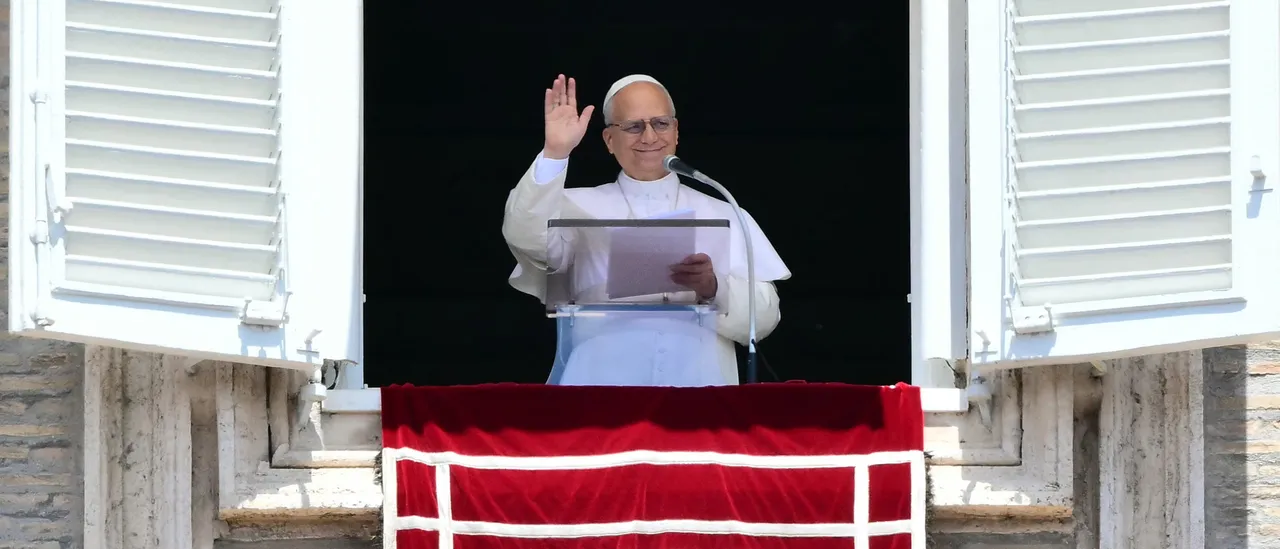
Meanwhile, Olah is slated to be a speaker on AI at the release of Pope Leo XIV’s first encyclical in late May, according to Vatican News.
Anthropic, known for its AI model Claude, was designated a supply chain risk by the DOW — a label typically reserved for foreign adversaries who may threaten U.S. national security — after months of intense discussions between the two parties, CNBC reported. Anthropic did not want its tech used for fully autonomous weapons or domestic mass surveillance.
The Pentagon continued to use Anthropic’s AI for military operations during the Iran war, according to the outlet. A Pentagon official confirmed during a Senate subcommittee hearing in late March that the DOW was using Claude amid the Iran War, The Hill reported.
The appeals court denied the startup’s request to temporarily halt the designation in April but ultimately expedited the case, according to CNBC.
The DOW argued that Anthropic’s alleged ability to “encode limitations into its model” could create an “untenable national-security risk,” .

CHONGQING, CHINA – DECEMBER 29: In this photo illustration, a person holds a smartphone displaying the logo of “Claude,” an AI language model by Anthropic, with the company’s logo visible in the background, illustrating the rapid development and adoption of generative AI technologies, on December 29, 2024 in Chongqing, China. (Photo illustration by Cheng Xin/Getty Images)
The Vatican announced Monday that the American-born pope will issue an encyclical, or guidance for Church bishops (the Magnifica humanitas), focused on “preserving the human person in the age of artificial intelligence.”
The guidance is scheduled to be released Monday, May 25, in accordance with a presentation event with the pope and other speakers at the Vatican, including Olah, according to Vatican News.
“The questions posed by AI are bigger than the AI community,” Olah said on X. “We urgently need the world — religions, civil society, academics, governments — to participate in creating a positive outcome.”
Read more REPORT: Judge Bars Most ICE Arrests At Immigration Courts In New York City
It is still unclear what Leo’s first encyclical will say. However, he has been cautious about the use of AI in the past, saying that although models may be able to “process information quickly,” they “cannot replace human intelligence,” according to OSV News.
“And don’t ask it to do your homework for you,” Leo told students. “It cannot offer real wisdom. It misses a very important human element: AI will not judge between what is truly right and wrong. And it won’t stand in wonder, in authentic wonder before the beauty of God’s creation.”
In a Tuesday interview with Daily Caller Editor-in-Chief Amber Duke, Eduard Habsburg-Lothringen, who served as the Hungarian ambassador to the Holy See for 10 years until 2025, said there have been many people, conferences and documents that have helped shape AI guidance in the Holy See.
“It’s good that a moral authority in the world, who does not have financial, economic or business interests, will speak about the dangers, but also the chances, of AI,” Habsburg said. “I would expect something extremely balanced, very well researched, very thoughtful and something very helpful.”
Habsburg added it is rare for the pope to give the encyclical himself, saying that despite many being primarily constructed by committees, this appears to have a lot of Leo himself in it.
“I have the impression that it’s a very personal encyclical, and we’re all going to be very curious about it.”
The Anthropic-Vatican partnership comes after a feud between the Trump administration and the Vatican. An April report from The Free Press — but denied by both parties — claimed the Pentagon had tried to strong-arm the Vatican into backing the U.S war against Iran.
The back-and-forth climaxed when President Donald Trump released a tirade on Truth Social against the pope, calling him “WEAK on Crime, and terrible for Foreign Policy” before asking him to stay out of politics altogether. (RELATED: The Latin Mass And Pope Leo: Eduard Habsburg On Catholic Identity)
Leo responded, saying that he has “no fear of the Trump administration” and that he “will not shy away from announcing the message of the Gospel and inviting all people to look for ways of building bridges of peace and reconciliation, and looking for ways to avoid war any time that’s possible.”
Read more There’s A New Suicide Drone On The Block, And America’s Enemies Are Salivating Over It







Post Comment