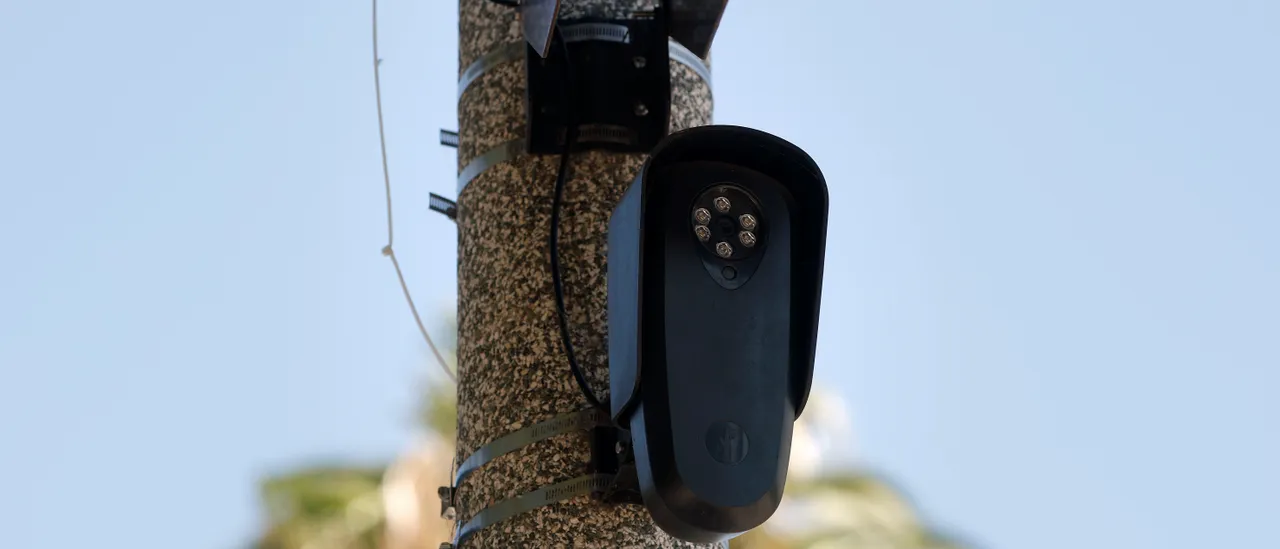
Think Of The Children! Flock Uses Emotional Blackmail To Sell Mass Surveillance
Flock Safety is touting emotional stories about automatic license plate readers (ALPRs) helping rescue children as concerns about the dangers of mass surveillance grow.
Read more ‘Nearly Orgasmic’: NYT Conducts Bizarre Interview With Doctor Behind MAGA Steak-And-Sauerkraut Diet
Rahul Sidhu, Flock’s chief strategy officer, posted a video on X Tuesday featuring moving clips of police rescuing missing children.
The video begins with 911 audio of a distraught woman telling the operator that her son had been kidnapped. It also includes clips that purport to show law enforcement rescuing a six-year-old nonverbal boy, finding a 14-month-old baby, and saving a two-year-old boy who asks, “Where’s my mom?”
“Every child in this video is home tonight because Flock gave officers the right information at the right second,” Sidhu wrote.
“That’s the mission. That’s the whole company. I wouldn’t trade that for anything,” he added.
But as Flock becomes one of the nation’s largest providers of ALPR systems, many Americans are beginning to question whether the constant monitoring of everyday citizens is legal and safe. (RELATED: SCOTT MOREFIELD: The Bipartisan Backlash Against Flock Cameras And America’s AI Surveillance State)
Garrett Langley, Flock Safety’s CEO and founder, posted a similar message on X Friday.
“Yesterday, Flock cameras alerted on 4,144 sex offenders, 2,151 stolen cars, 1,687 wanted people, 158 missing persons/kids, and most importantly, an amber alert,” Garrett Langley wrote on X.
“Children were rescued in Dothan AL, Charlotte NC, North Kingstown RI, and more,” he added.
The National Crime Information Center stores the license plate numbers of registered sex offenders in its database, according to Mark Ralston, a West Virginia law enforcement administrator who spoke to The Dominion Post. That means Flock ALPRs could flag the 4,144 registered sex offenders Langley cited whenever they pass a camera — not only when police are actively trying to locate them.
Not everyone is convinced, though, that potentially greater security is worth the privacy tradeoff.
Read more FBI Agents Arrest Heavily Armed Man at Trump Golf Course: REPORT
Kansas privacy advocate Mason Grimmett has serious concerns about the government’s ability to use Flock ALPRs to track, analyze and store his movements in a long-term database. Grimmett filed a Thursday accusing the city of Wichita of “continuously tracking, surveilling, monitoring, and compiling a searchable database on law-abiding Kansans—without a warrant, without probable cause, without reasonable suspicion.”
The Kansas Justice Institute, which is representing Grimmett, described how ALPR cameras do far more than read license plates and enforce traffic laws. The cameras send every picture to Flock servers, where AI forms a “Vehicle Fingerprint” based on the car’s make and model, as well as its bumper stickers, bike racks, dents and scratches. That fingerprint goes into a database accessible to police departments across the country with Flock memberships.
Flock’s website says every search of its database is “logged, justified, and auditable,” but that hasn’t eliminated privacy concerns.
Former Kansas Police Chief Lee Nygaard admitted to repeatedly using the Flock system to locate vehicles belonging to his ex-girlfriend and her boyfriend in 2023, according to The Wichita Eagle. Another former Kansas police officer, Victor Heiar, was of computer crime and stalking in 2023 after he logged in to the Flock database to track his estranged wife.
Two prominent Tennessee Republicans have raised additional about the constitutionality of the cameras.
Knox County Mayor Glenn Jacobs described ALPRs as “inadvertently creating a warrantless mass surveillance system” in an X post last week.
“While License Plate Readers have been around for a while, because of AI and vastly increased networking and data retention capacities, these Flock cameras have capabilities not even imagined in the past,” Jacobs wrote. He urged county officials to reject the cameras.
Republican Tennessee Rep. Tim Burchett has drafted a bill that would regulate the government’s use of surveillance technology.
“We gotta keep our country safe. What we can’t sacrifice is the freedoms, of course, that define us,” Burchett said in a video posted on X last month. “It violates the Fourth Amendment.”
Read more White House Reportedly Plans To Keep Trump’s AI Framework Secret












Post Comment