Taiwan Passes Massive $7,560,000,000 Drone Plan As China Threat Looms
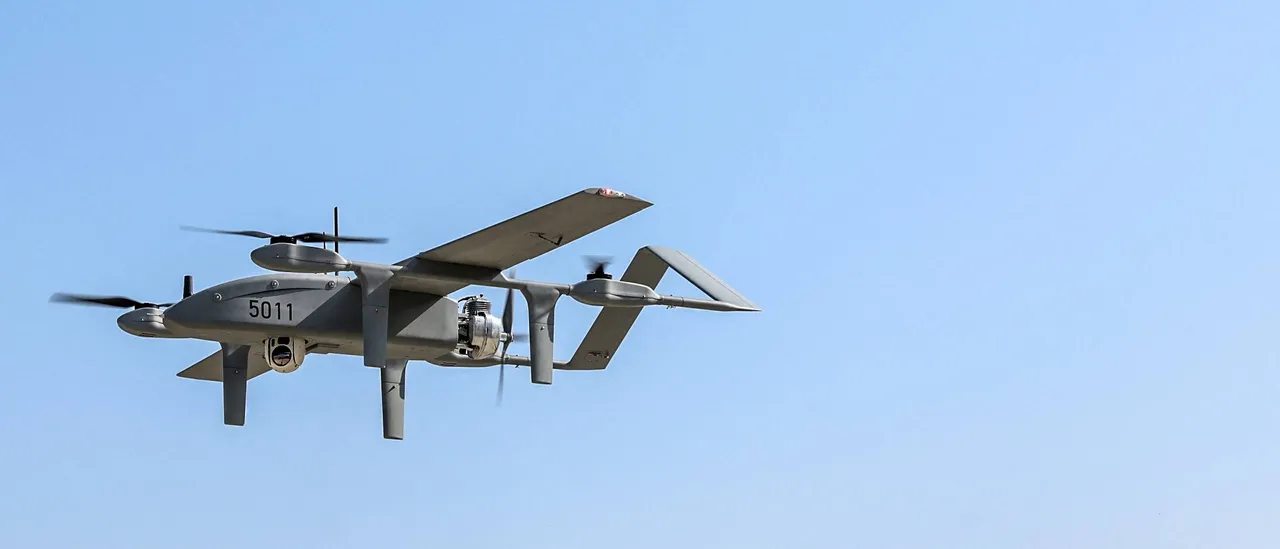
Taiwan’s parliament approved a roughly $7.56 billion military drone plan Thursday to rapidly expand the island’s unmanned arsenal as it prepares for a possible conflict with China.
Read more ‘Set Me Up’: Ex-College Basketball Star Calls Out Coach K In Alarming Videos
The opposition-led Legislative Yuan passed the six-year plan in a 60-50 vote, setting a spending cap of NT$240 billion (New Taiwan dollars), roughly $7.56 billion U.S. dollars, with additional funding allowed subject to legislative approval, Focus Taiwan reported. Lawmakers rejected the government’s competing NT$210 billion, roughly $6.6 billion, special-budget proposal, which would have supported the purchase of roughly 210,000 unmanned systems through 2031, according to the outlet.
“Taiwan’s massive investment in drones is incredibly important,” Zack Cooper, a national security analyst and senior fellow at the American Enterprise Institute, told the Daily Caller News Foundation. “The Ukraine War has demonstrated how vital these capabilities are on the modern battlefield.” (RELATED: Taiwan Unveils Record Defense Budget As China Threat Grows)
Ahead of Thursday’s vote, Taiwanese President Lai Ching-te urged lawmakers Wednesday to back the government’s package, framing the program as both a military requirement and a demonstration of Taiwan’s willingness to defend itself, Reuters reported. Lai has argued that drones are becoming a central part of the island’s effort to strengthen asymmetric capabilities against a much larger Chinese military, according to a statement from Taiwan’s Presidential Office.
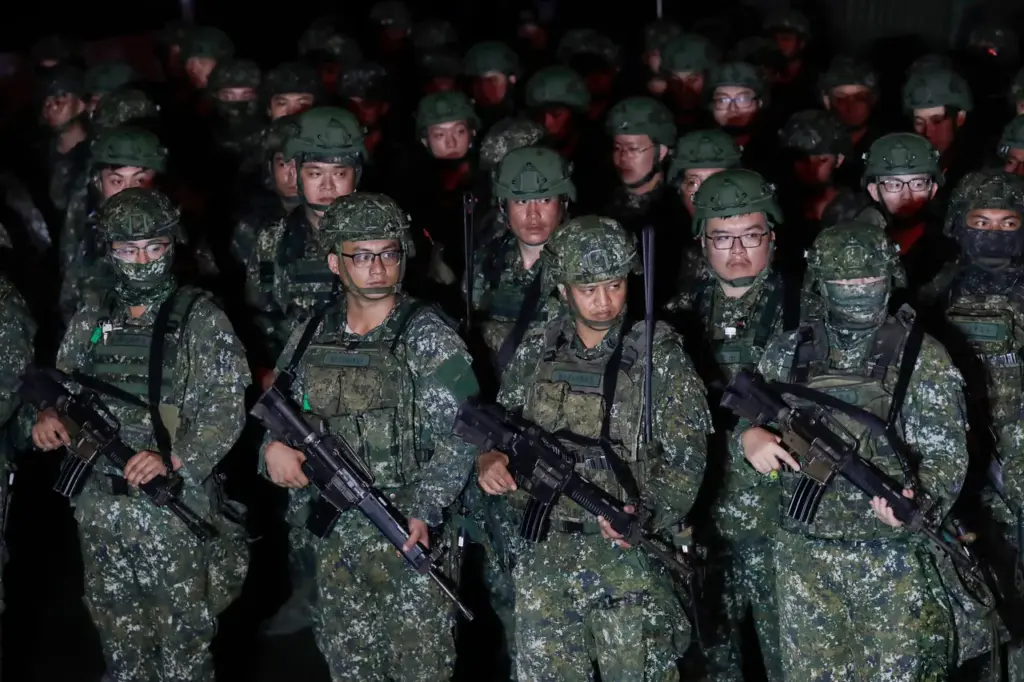
Photo by Chiang Ying-ying / POOL / AFP via Getty Images
The government plan ran into resistance in Taiwan’s opposition-controlled parliament, where lawmakers instead backed legislation that draws drone spending from the regular budget rather than a separate special appropriation. The law calls for the central government to earmark NT$40 billion annually for six consecutive years in principle and gives both the Ministry of National Defense and Ministry of Economic Affairs roles in implementing the program, Focus Taiwan reported.
Taiwan’s drone buildup mirrors a U.S. military concept dubbed “Hellscape,” under which American forces would flood the Taiwan Strait with thousands of unmanned submarines, surface vessels and aerial drones to disrupt a Chinese invasion and buy time for U.S., Taiwanese and allied forces to mount a broader response, U.S. Indo-Pacific Command chief Adm. Samuel Paparo told the Washington Post.
“I want to turn the Taiwan Strait into an unmanned hellscape using a number of classified capabilities,” the Post reported, citing Paparo. “So that I can make their lives utterly miserable for a month, which buys me the time for the rest of everything.”
“Now Taiwan must show that they can not only build drones, but also integrate them into individual units with the doctrine, training, and command and control changes that this will require,” Cooper told the DCNF. “A mix of shorter and longer range systems will be necessary to build the sort of ‘hellscape’ capability that Admiral Paparo has talked about.”
Rapidly changing drone technology makes it risky to purchase massive quantities too far in advance because systems could become outdated quickly, Reuters reported, citing Lai Shyh-bao, a lawmaker from the Kuomintang — Taiwan’s largest opposition party. The government, however, rejected the suggestion that its proposal amounted to a single bulk purchase.
Acquisitions under the government’s proposed plan would have taken place annually from August 2026 through the end of 2031, with the program structured to allow unmanned systems to undergo iterative technological updates, according to Taiwan’s Ministry of National Defense.
Read more ‘Dawson’s Creek’ Alum Shares Shocking Diagnosis
A NT$40 billion annual ceiling could interfere with the military’s buildup because the defense ministry planned to spend NT$42.1 billion in 2027 on the three categories covered by its proposed special act alone, Taiwan’s Ministry of National Defense reported, citing Defense Minister Wellington Koo.
The vote comes as Taiwan looks to expand both its military drone inventory and the domestic industrial base needed to keep those systems in service.
Parliament earlier in August approved separate measures aimed at developing the country’s drone industry, with particular emphasis on creating a supply chain that does not depend on Chinese components, Reuters reported. Taiwan’s National Development Council has also identified drone manufacturing and supply-chain resilience as strategic industrial priorities.
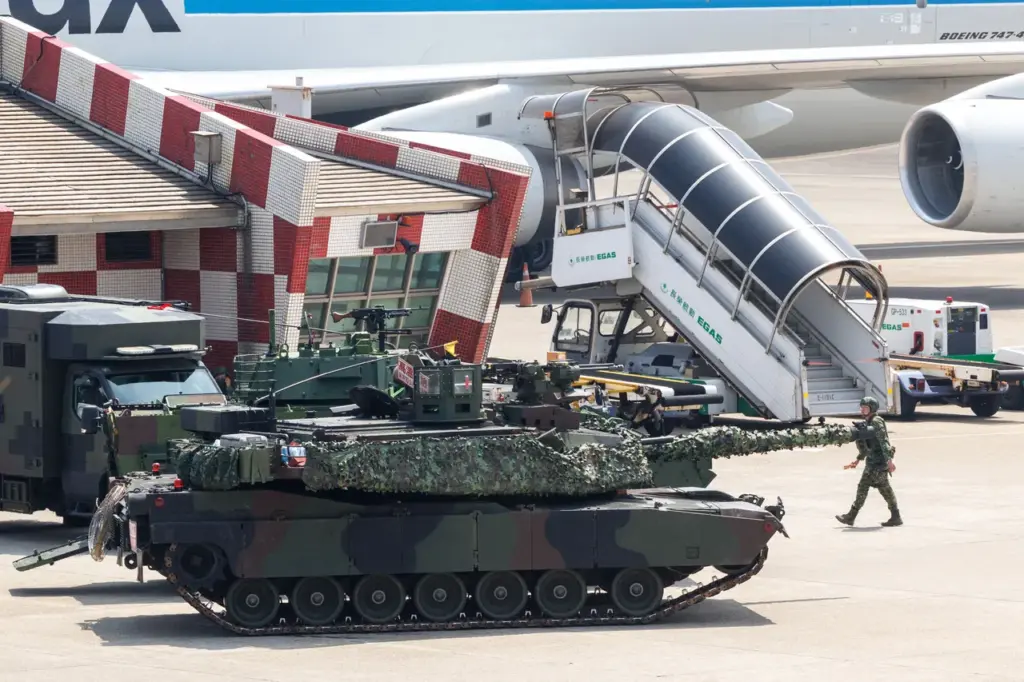
Photo by CHENG Yu-chen / AFP via Getty Images
China dominates the global commercial drone market, with Chinese manufacturer DJI controlling nearly 70% of the worldwide market and more than 90% of the consumer segment, according to the U.S.-China Economic and Security Review Commission. That dependence creates a particular problem for Taiwan, which is attempting to prepare a wartime drone force while reducing exposure to components and suppliers linked to the country it views as its principal military threat.
Taipei’s strategy is rooted in a broader push toward asymmetric warfare, with officials seeking systems that can impose disproportionate costs on an invading force without requiring Taiwan to match China’s military platform for platform.
“There will be a running game of advances and countermeasures, so Taiwan will have to constantly update its systems and procedures for using drones and integrating them into its military, but my sense is that Taipei is making rapid progress in this area,” Cooper told the DCNF.
Beijing has accused Lai and Taiwan’s ruling Democratic Progressive Party of attempting to pursue independence and resist unification through military force, China’s Taiwan Affairs Office reported, citing spokesperson Zhang Han. Taiwan rejects Beijing’s sovereignty claim, while Lai has maintained that the island’s future should be decided by its people, according to the Taiwan Presidential Office.
The legislation directs the Defense Ministry to prioritize domestically produced “low-cost, high-performance” unmanned systems and covers aerial, surface, underwater and ground platforms for missions including attack, reconnaissance, logistics, communications and electronic warfare, Focus Taiwan reported. The Economy Ministry will oversee implementation of the law alongside the Defense Ministry, including requirements surrounding domestic production and trusted supply chains, according to the outlet.
Taiwan’s Defense Ministry expressed “regret” that the government’s original special-budget proposal failed, arguing that its plan would have allowed the military to acquire the three planned categories of unmanned systems as quickly as possible while accounting for technological advances, combat requirements and domestic production capacity, according to Taiwan’s Ministry of National Defense.
Read more ‘Transformers’ Icon Peter Cullen, Legendary Voice Of Optimus Prime, Dead At 85














Post Comment