China Cushioned Iran Oil Shock By Draining Reserves, While Americans Get $4 Gas
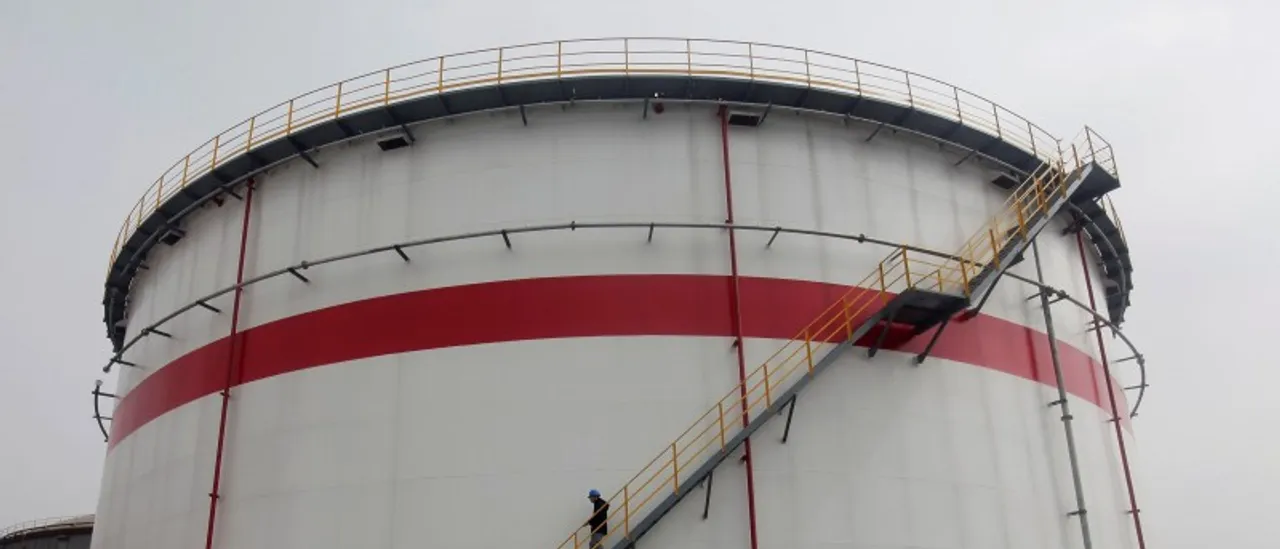
China appears to have cushioned its oil shock from the Iran war by using reserves it spent years building — while America’s emergency stockpile sits at its lowest level in 44 years.
About 60% of China’s drop in oil imports reflected a shift from stockpiling crude to drawing down reserves, while weaker demand accounted for the remainder, according to an analysis published Thursday by the Centre for Research on Energy and Clean Air. In contrast, the U.S. Strategic Petroleum Reserve (SPR) held 286.6 million barrels the week ending Aug. 28, its lowest level since November 1982, after President Donald Trump released 172 million barrels in March on top of roughly 300 million barrels that were sold under President Joe Biden.
Since Aug. 1, national average U.S. gasoline prices have exceeded $4 a gallon every day.
“China was the swing influencer in this disruption, the tale of two SPRs,” Stu Turley, president and CEO of Sandstone Group and host of the Energy News Beat podcast, told the Daily Caller News Foundation.
Turley said China tapped its reserves rather than buy oil and then cut demand. The U.S., he said, sold reserve barrels to Japan and other countries.
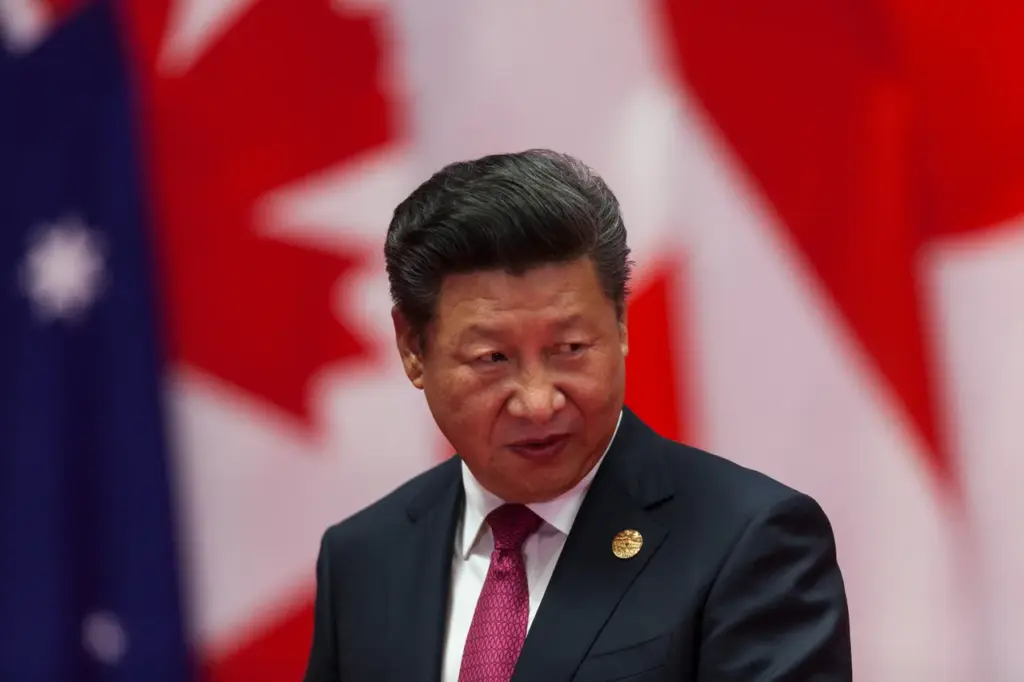
“The foresight of the [Chinese President] Xi Jinping government to create the country’s massive strategic reserve enabled China to take that action,” David Blackmon, a 40-year oil and gas industry veteran and energy writer, told the DCNF. “Unfortunately, the U.S. didn’t have quite the same luxury.”
AAA listed the national average for regular gasoline at $4.14 per gallon Thursday, up from $2.98 two days before the war began. Brent crude rose 1.1% to $96.72 a barrel Thursday as the Iran war intensified, the Associated Press reported.
“Pain at the pump will remain through 2027 and we are seeing the highest crack spreads in history,” Turley said. He added that only two things could ease gas prices: more refining throughput or demand destruction.(RELATED: Warning Signs Flash As America’s Oil Reserves Bleed For Iran War)
The White House referred the DCNF to the Department of Energy (DOE) when asked for comment. The DOE, the America First Policy Institute, and CREA did not immediately respond to the DCNF’s requests for comment.
On March 11, Trump ordered the release of 172 million barrels from the SPR, as the U.S. share of a 400-million-barrel action by International Energy Agency member nations in response to Iran having closed the Strait of Hormuz due to the Iran war. EIA data show the reserve fell from 415.4 million barrels in the week ending Feb. 27, the day before the war began, to 286.6 million barrels on Aug. 28, a drop of 128.8 million barrels.
Xi Jinping. Shutterstock
During his term, former President Joe Biden sold nearly 300 million barrels from the reserve, including a record 180-million-barrel emergency release following Russia’s invasion of Ukraine in 2022, Fortune reported. Trump pledged in his inaugural address in January 2025 that he would refill the reserve “right to the top.”
In July, White House spokeswoman Taylor Rogers told the DCNF that Trump had “exchanged the barrels for lower-cost barrels that will be delivered back to the SPR,” while the Biden administration “irresponsibly drained the SPR for political gain.” The exchanged barrels are due back in early 2027, Energy Department Under Secretary Kyle Haustveit told the DCNF at the time.
Blackmon said that Biden-era drawdowns damaged the reserve’s infrastructure, making it harder to refill until those repairs are complete, and warned that further withdrawals risk deepening the damage.
Read more DOJ Just Slapped Virgin Islands With Another Complaint Over Semiauto Gun Ban
“With crude prices still rising and causing economic pain to U.S. drivers, the White House and DOE face a tough decision on when and how to halt further withdrawals to help keep markets in balance,” Blackmon told the DCNF.
More than a quarter of the SPR’s inventory was unavailable for drawdown in December 2025 due to damaged caverns and ongoing construction, the Government Accountability Office found in a report released in June. Sandia National Laboratories, the geotechnical advisor for the SPR since 1980, cautioned in 2024 that well deformations were outpacing the department’s efforts to reduce the risk of well failures.
“The U.S. should seriously consider halting additional withdrawals from its SPR, which is already at its lowest level since 1982,” Jason Hayes, senior research fellow at The Heritage Foundation’s Center for Energy, Climate, and Environment, told the DCNF. “Continuing to draw down the SPR diminishes its effectiveness as a strategic reserve.”
Hayes said the administration should follow through on refilling the reserve “right to the top” and that Energy Secretary Wright’s plan to swap domestic light crude into the SPR while Venezuelan heavy crude goes to U.S. refineries would speed the process.
“A full SPR, paired with policies that expand domestic production, is the combination that strengthens energy security,” he said. “Treating the reserve as an ATM does the reverse.”
A final 39-million-barrel tranche from the March agreement remains pending and would bring the reserve down to roughly 243 million barrels, Reuters reported. Siddharth Misra, a petroleum engineering professor at Texas A&M University, told Reuters that the practical minimum for safe operations is close to 250 million barrels.
China’s oil consumption fell approximately 9% in Q2, according to National Bureau of Statistics data cited by CREA. Transport fuel use decreased 16% even as passenger trips and freight volumes grew. The analysis also found that electric vehicle charging rose 60%, the EV fleet grew 33% year over year, and electric heavy trucks topped 45% of new truck sales.
CREA estimated that electric vehicles (TVs) displaced 36 million tons of oil in the first half, more than the U.K. consumes in six months. But that shift accounted for only about a third of China’s drop in oil consumption. The analysis also found that coal-fired generation rose 2.4% in the second quarter and China added 30 gigawatts of coal capacity in the first half, the most since 2016. China’s June crude imports fell to roughly 40% of prewar levels, Reuters reported in July.
The crisis “has very clearly validated China’s energy security strategy and especially the role of electrification as a part of that strategy,” CREA lead analyst Lauri Myllyvirta told Agence France-Presse.
Trump has said the new Venezuela oil venture, in which the Pentagon will hold a 35% stake, will refill the reserve. Asked Monday when drivers could expect prices to fall, Trump said “it could be a little bit,” according to The Associated Press.
Secretary Wright oversaw the signing of new agreements involving Chevron and Eni in Venezuela on Wednesday. Chevron said that over the course of the next 5 years they plan to invest more than $7 billion, Bloomberg reported. Wright said Venezuelan oil would lower gas prices within 12 to 24 months, the Washington Examiner reported. The reserve’s salt caverns were not built to hold Venezuela’s heavy crude, but Wright has suggested trading it for barrels that the SPR can accept, according to the Examiner.
“The biggest kink right now in gasoline and diesel prices is refining capacity,” Wright told reporters in Caracas on Wednesday, according to Reuters.
Read more Kai Trump Says She’s Been Sobbing, Hasn’t Eaten For Days During College Transition
The EIA will release its next weekly reserve figure Thursday, Sept. 10.













Post Comment