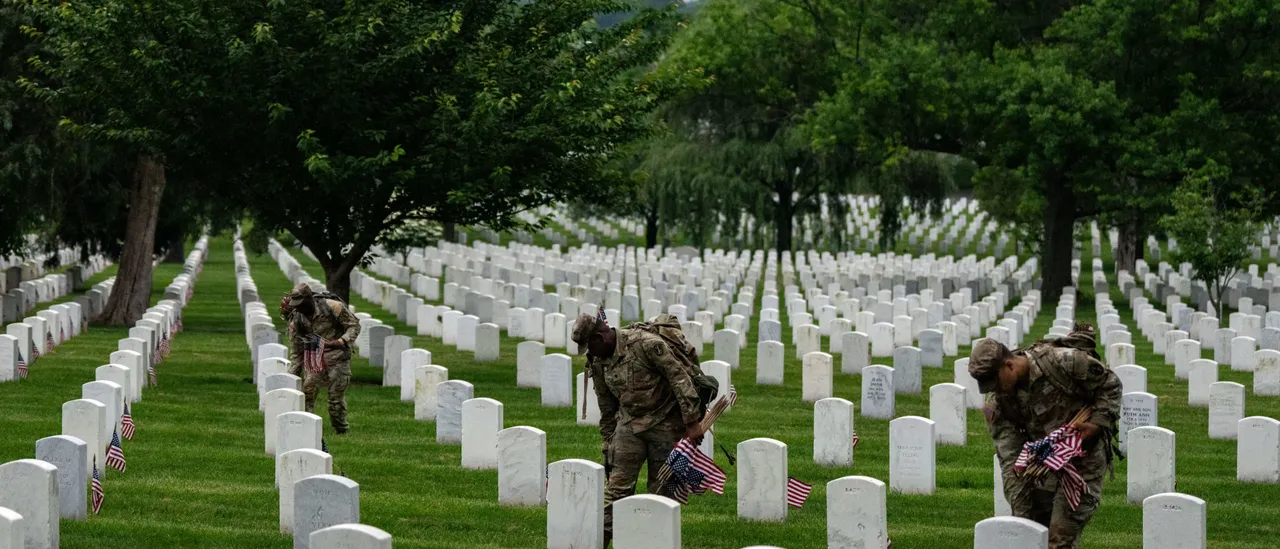
America’s Most Dangerous Grave Resides Just Outside The Nation’s Capital
Spc. Richard Leroy McKinley’s white marble headstone may look like the others in Arlington Cemetery, but his grave serves as a grim reminder of the first fatal nuclear accident in America.
Read more Editor Daily Rundown: Trump Admin Moving Toward Iran Deal, Official Tells Daily Caller
McKinley’s grave is the only radioactive grave in the cemetery. He was laid to rest in a double lead-lined casket and lowered into a 10-foot concrete grave encased in a metal vault with an additional foot of concrete poured atop his casket. (EXCLUSIVE: Gold Star Families Had Trouble Getting Trump Into Arlington Until House Speaker Intervened)
McKinley’s family had to watch the eight-minute veteran’s funeral from 20 feet away.
was born on December 2, 1933, in Union City, Indiana, but he grew up with his big family in Kenton, Ohio. McKinley enlisted in the United States Air Force in 1951 and served in Korea. He married his hometown sweetheart, Caroline Dick, on June 1, 1956, and they had two children together.
He later enlisted in the United States Army and began serving as an operator at the National Reactor Testing Station in 1961, just outside Idaho Falls, Idaho. Nuclear reactors were built and tested at this site, including an experimental design known as the Stationary Low-Power Reactor Number One (SL-1).
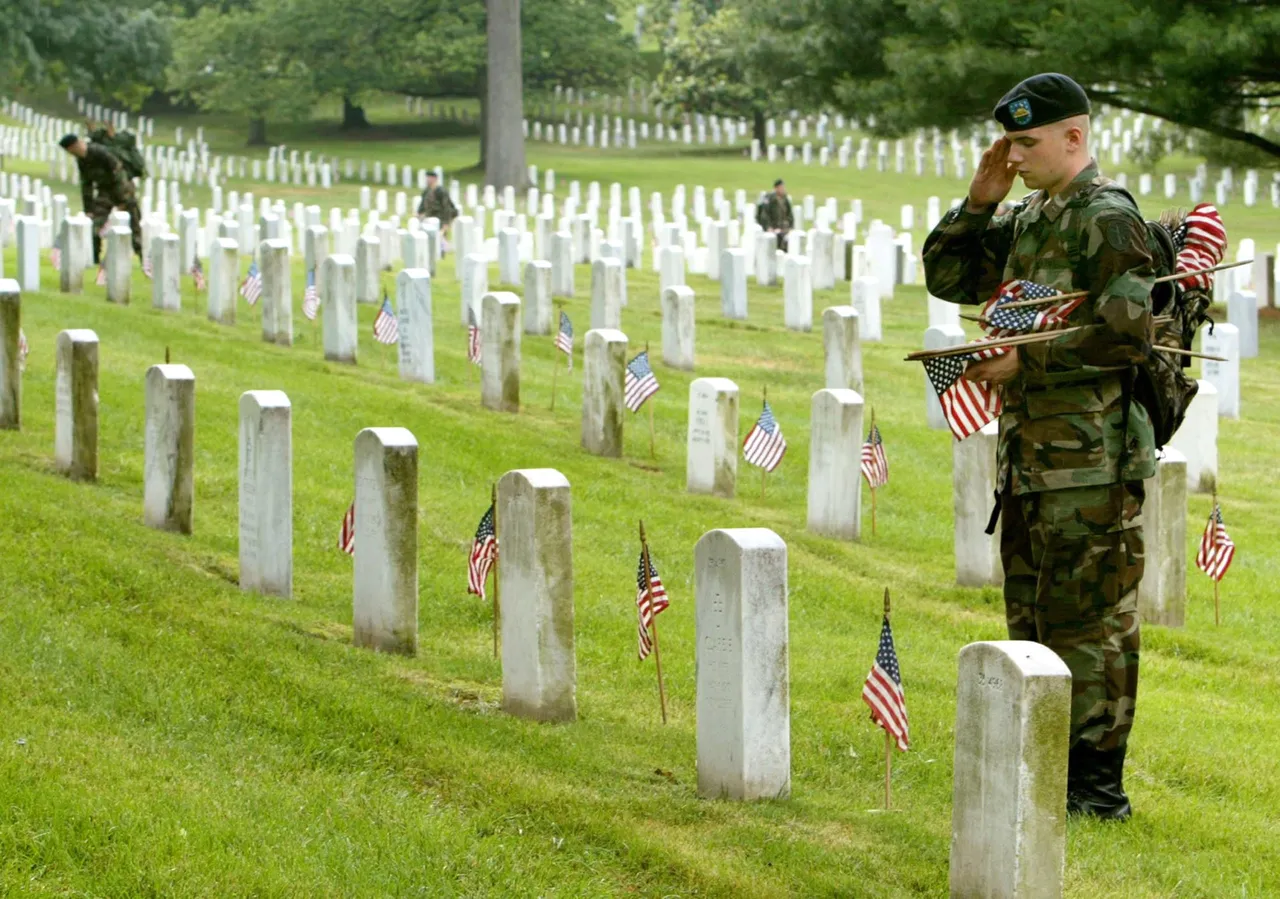
ARLINGTON, VA – MAY 27: A member of the U.S. Army Infantry Regiment (The Old Guard), salutes after placing a flag on a grave stone at Arlington National Cemetery, May 27, 2004 in Arlington, Virginia. An event called “Flags In” takes place before every Memorial Day weekend in honor of those veterans who have lost their lives. (Photo by Mark Wilson/Getty Images)
Read more Jazz Music Icon Sonny Rollins Dead At 95
On January 3, 1961, operators came to work at the reactor station following a 10-day closure for the holidays. Around 9:00 p.m., the alarm rang out after a steam explosion erupted in the SL-1 reactor, killing Army Spc. John Arthur Byrnes and Navy Seabee Richard Carlton Legg.
When first responders arrived an hour and a half later at 10:35 p.m., they found the two men dead on the ground, as well as McKinley, who had miraculously survived the initial explosion. They also encountered dangerously high levels of radiation and rushed McKinley to the hospital.
McKinley tragically died at just 27 years old shortly after being placed in the ambulance, leaving behind his wife and two children.
McKinley’s grave is now safe to visit; it remains the only radioactive burial plot in the cemetery, and his cemetery file reads with a grim warning.
“Victim of nuclear accident,” the file reads. “Body is contaminated with long-life radioactive isotopes. Under no circumstances will the body be removed from this location without prior approval of the AEC [Atomic Energy Commission] in consultation with this headquarters.”
Read more Hoover Dam Adorned With Football Field-Sized American Flag Ahead of 250th Celebration






Post Comment