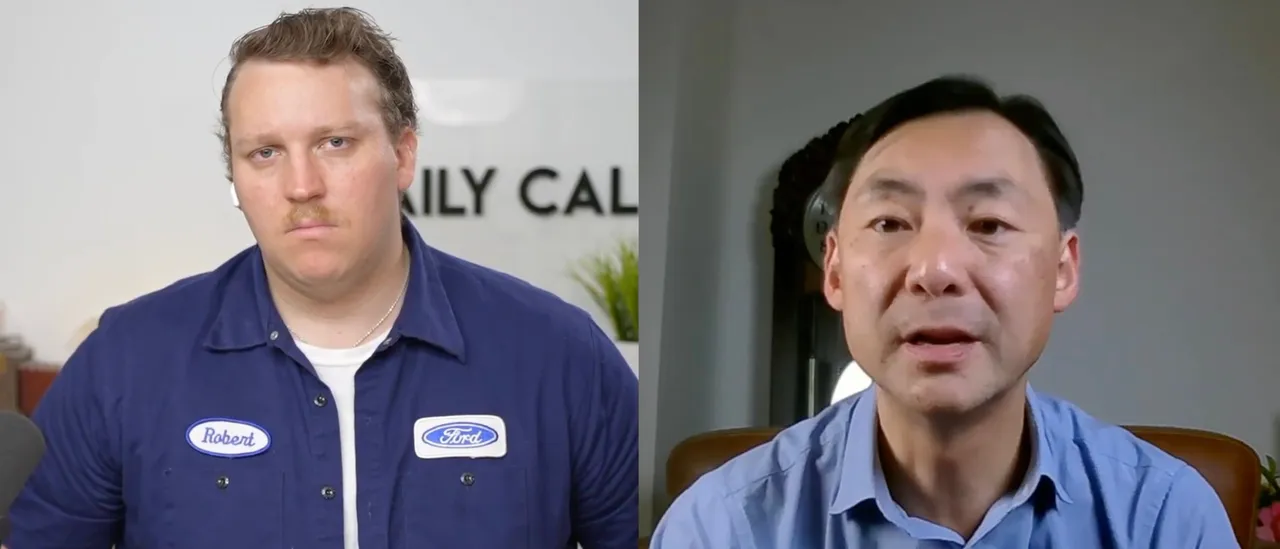
EXCLUSIVE: Former US Ambassador Barred From Leaving Allied Nation Speaks Out To Daily Caller
Former U.S. Ambassador-at-Large for Global Criminal Justice Morse Tan tells the Daily Caller that South Korea has placed travel bans on him, describing it as a freedom of speech violation after having criticized the nation’s president, including for thoughts shared while in the U.S.
Tan shared details about the impending trial, the current state of South Korea, its relationships with North Korea and China, and how the Trump administration is responding. (RELATED: The End Of The Miracle That Is South Korea)
WATCH:
He has spoken at numerous events in South Korea and the U.S. about what he described as corruption in South Korea’s current administration; his remarks have led to defamation charges against him.
The first followed an event in Washington, D.C., last June, where Tan said: “It is said that [President Lee Jae Myung], as a youth, was involved in gang-raping and murdering a young lady, and as a result was put in juvenile detention and therefore was not able to attend junior high and high school.”
The second count stemmed from what Tan described as “A series of questions relating to what was asked of me” regarding the allegations while speaking at a public event in South Korea last July.
Since returning to South Korea in May to monitor an election, Tan has been barred from leaving the country five times as he awaits trial.
Tan described it as a “show trial,” which has since been delayed until mid-Oct. and could lead to seven years in prison if he is convicted.
“This is wrong on every level and from every angle,” Tan said, adding that he still believes the claims he made. He reiterated that he was merely referring to what others have reported and that many others have made similar claims without facing the same legal scrutiny.
Tan also said he should not be held criminally liable for something he said in good faith about a public figure while in the U.S., adding that the charges are also in violation of free speech protections in South Korean law, as well as treaties that it has signed.
“From whichever angle you want to look at it, this case really is not meritorious,” Tan, a former dean of Liberty University School of Law, said, adding that he has “not been given due process.”
Read more The Trucking Lobby’s Contradictory Campaign On Accountability
While he said the case would be unfair to anyone, the barring of a former Trump administration ambassador is “a punch in Trump’s face,” Tan told the Caller.
Tan told the Caller that he is speaking with members of the administration, but didn’t want to get into detail about who he spoke with or what options are being discussed.
A spokesperson for the State Department told the Daily Caller that the administration has “no higher priority than the safety and security of Americans.”
“The United States firmly supports every American’s right to freedom of expression and stands ready to raise our concerns directly with foreign governments when they use criminal defamation or similar laws to punish U.S. citizens for political speech,” the spokesperson said. “In particular, we are concerned by any action taken by a foreign government to apply its law to pursue charges against a U.S. citizen for statements made in the United States.”
The spokesperson added that they take concerns of any American citizens subject to exit bans seriously, but due to privacy considerations, they had no more to share on the specifics of Tan’s case.
Tan told the Caller that those running South Korea today “should be thought of as North Korean operatives.”
“What you’re talking about is what President Trump correctly identified as a revolution and a purge,” Tan said, adding that “pro-North Korean elements have seized power here in South Korea. And so they are rapidly communizing the country and extinguishing basic rights and freedoms.” (RELATED: ‘Forced To Choose’: Ambassador Says Key US Ally On Verge Of Tipping Toward China)
He also argued that although the South Korean people love America, its leadership has turned the Korean peninsula “into a vassal state of the Chinese Communist Party.”











Post Comment