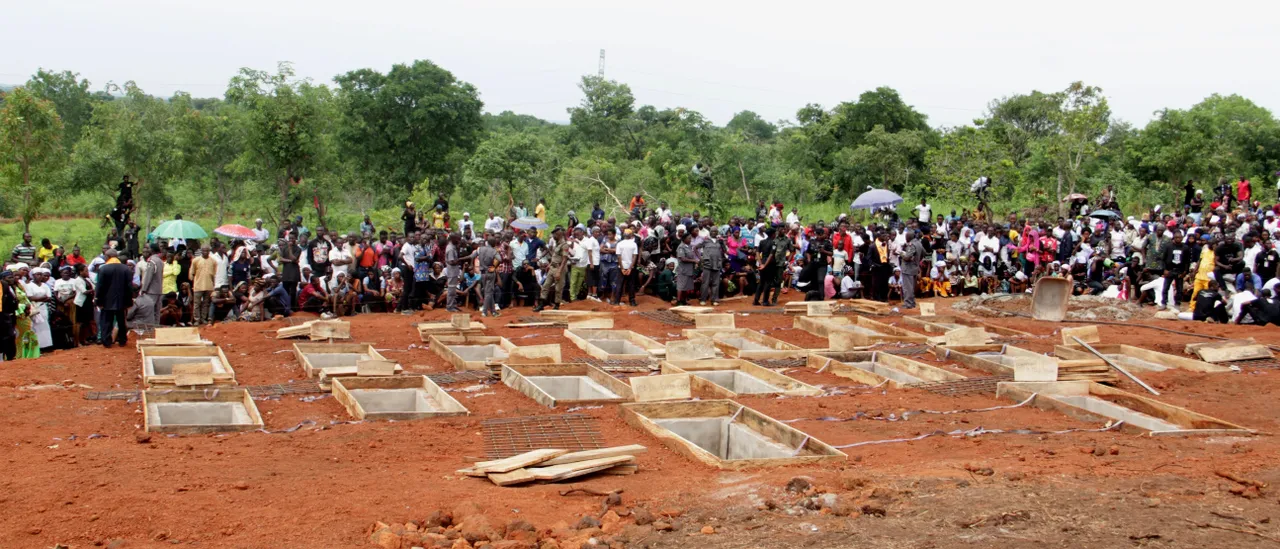
Faith Groups Warn Proposed Law Could Blind America To Christian Massacres
A multifaith coalition of religious freedom groups is warning Nigeria’s Senate that a proposed law could restrict independent documentation of attacks on Christians, potentially making it harder for the U.S. government to assess the violence and determine whether Nigeria should continue receiving foreign aid.
Read more ‘You Go After My Mom?’: Rogers And El-Sayed Unleash Personal Attacks In First Debate
The letter, submitted Wednesday by the Africa Working Group of the International Religious Freedom Roundtable, was addressed to the president of the Nigerian Senate, Godswill Akpabio, and warns of the potential effects of the Foreign Aid (Regulation, Transparency, and Disclosure) Bill 2026. (RELATED: EXCLUSIVE: Nigerian Leaders Turn On Alleged ‘Christian-Killing’ Warlord After U.S. Pressure According To Whistleblower)
The legislation was introduced in May and seeks to establish a Foreign Aid Regulatory Commission to register, inspect, audit, sanction, and suspend or shut down organizations that receive foreign grants, donations, or technical assistance.
While the bill may have been introduced to minimize foreign influence, the working group argues it could harm independent civic actors, human rights defenders, legal aid providers, and humanitarian organizations seeking to help Nigerians, and that it may be used to target faith-based groups for criticizing the Nigerian government.
The letter raises several concerns, including a requirement that foreign aid be registered within 30 days of receipt, which the groups say could harm rapid-response aid to survivors of human rights violations.
The letter also raises concerns about a requirement that NGOs publicly disclose their partners in a register, which signatories say could harm or endanger survivors, witnesses, and human rights defenders.
The signatories’ chief concern is a provision requiring all foreign-funded activity to “align” with Nigeria’s national development plans and priorities, which they argue is broad and vague. The groups argue that it could create an opportunity for the government to label organizations documenting human rights violations as being “out of alignment” with the priorities of the current or future administration.
The signatories called for the bill to be withdrawn or amended to include explicit protections for human rights defenders.
The coalition also argues that the bill undercuts recommendations accepted by the Nigerian government in 2024, when it guaranteed “a safe and enabling environment for human rights defenders and civil society organizations, and to protect the rights to freedom of assembly, association, and expression.”
“By protecting these three, the right to Freedom of Religion will be explicitly protected as well,” the letter continued.
Signatories include, among others, Nina Shea of the Hudson Institute Center for Religious Freedom, Troy A. Miller with National Religious Broadcasters, and Dede Laugesen of Save the Persecuted Christians.
Co-founder of the Africa Working Group, Scott Morgan, told the Daily Caller that, in addition to the Nigerian Senate, the letter was also sent to the Nigerian presidency, some members of the U.S. Congress, the U.S. Commission on International Religious Freedom, and the U.S. State Department.
Read more Tech Bro Military Contractor Has Crazy Plan To Save America’s Marriages
He said the State Department has reached out to the American embassy in Nigeria for further information.
Additionally, the Foreign Aid Regulatory Commission could affect the information reaching the Trump administration, which has used independently gathered reports to inform a bevy of executive actions designed to persuade the Nigerian government to act.
The most notable was President Donald Trump’s designation of Nigeria as a Country of Particular Concern (CPC), for which he specifically cited numbers collected by an NGO to show that Christians were being killed in the country by the thousands. If access to such information is cut, it would be harder to justify the CPC status, which allows the administration access to diplomatic and economic levers.
Morgan also warned that the Nigerian legislation could be an attempt to stop foreign oversight over the election.
The Catholic Bishops Conference of Nigeria has also spoken up against the bill, calling for the government to suspend the legislation as it could give “government officials excessive discretion over churches, mosques, schools, and humanitarian organisations receiving foreign assistance.”
Instead, the bishops said existing laws are sufficient and challenged the government to “do more to protect human dignity, tackle insecurity, and ease the economic hardship confronting millions of Nigerians.”
The deputy director of the Socio-Economic Rights and Accountability Project told TruthNigeria, another foreign-based NGO that funds on-the-ground reporters gathering information about terrorist attacks, that “subjecting independent media and human rights groups to an additional executive-controlled regulatory regime creates conditions conducive to self-censorship as Nigeria approaches the 2027 general elections.”
The head of TruthNigeria and its sister organization Equipping the Persecuted, designed to offer direct aid to survivors of these attacks, Judd Saul, told the Daily Caller that “This is a clear signal that there are factions within the Nigerian government who will do everything within their power to hide the truth and put innocent civilians in danger.”
The bill has already passed its second reading in the Nigerian Senate. It is currently before the Senate Committee on Foreign Affairs for legislative scrutiny and public hearing preparation before it is passed on to the House. (RELATED: ICE Arrests Nigerian Illegal Immigrant For Exposing Himself While Allegedly Canvassing In Key House Race)
Senator Godswill Akpabio did not respond to the Daily Caller’s request for comment.
Read more Mike Rogers Changes Tune On Trump’s Tariffs As Election Approaches



Post Comment