BOEBERT: Surveillance On Every Corner Is Not Freedom
As we near the 25th anniversary of September 11, 2001, I write in defense of freedom not as a politician seeking applause, but as a Coloradan, a mother, a grandmother, and a fierce defender of the liberties that define this nation. Fixed license plate reader cameras are quietly turning American streets into zones of constant monitoring. These systems continuously scan and record vehicle plates, logging time, location, and travel patterns. In community after community, this infrastructure has often expanded without explicit statutory authorization, clear democratic limits, or the individualized suspicion that a warrant typically requires. It is simply happening. The result is a growing database of everyday movements — where people work, worship, shop, and take their children — compiled without the consent of the governed.
Read more ‘Current Path Not Sustainable’: UCLA Fires AD Martin Jarmond Citing ‘Significant Financial Deficit’
Since September 11, 2001, Americans have been asked repeatedly to trade pieces of liberty for promises of security. The Patriot Act and related measures expanded government surveillance powers in ways earlier generations would have rejected. Many of those steps were advanced with the best of intentions. The justification was almost always the same: “If you’re innocent, you have nothing to worry about.” That phrase has become the soft rationalization for hard erosions of privacy. It shifts the burden onto citizens to prove they deserve freedom rather than requiring government to justify intrusion. The Constitution does not work that way.
Automatic license plate readers take this logic further. Fixed camera networks treat the general public as a pool of potential data points. Patterns of daily life are recorded and retained, sometimes for months or years. When citizens or lawmakers raise concerns, the pushback is frequently emotional rather than constitutional. Questioning these systems is framed as a failure to support police. Let me be clear: no one backs the blue more than I do. I have stood with officers, defended their ability to do their jobs, and rejected the reckless rhetoric that endangered both law enforcement and the communities they protect. Supporting the men and women who wear the badge does not require surrendering the Bill of Rights. My mission is freedom. Cameras on every street corner tracking free citizens is not freedom. It is the opposite.
The problem deepens when the data leaves legitimate policing. Information is often shared widely, retained far longer than necessary, and in some cases made available to government agencies through commercial data vendors. When the movements of millions of Americans become a commodity that enriches a few while the many are cataloged, we have moved from public safety into the monetization of liberty itself. Ordinary people become the product. That is a manipulation of freedom, not its protection.
We need look no further than Hong Kong for a cautionary example. During the major 2019–2020 pro-democracy protests, authorities extensively used surveillance technology. Protesters smashed cameras, covered lenses with paint or plastic, used umbrellas and lasers to block them, and tore down “smart” lampposts out of fear they could be used to surveil protesters. Hong Kong police had access to AI facial-recognition tools, and the crackdown that followed accelerated the expansion of camera networks under mainland China’s high-tech surveillance model.
Americans should not wait until similar systems are fully entrenched here before demanding accountability.
Companies such as Flock Safety have rightly drawn public attention for their widespread deployment of these systems, yet they are far from alone. Many vendors manufacture and sell this technology, and the problem is bigger than any single firm. To fix the situation, we must restrict the federal grant funding that can be used to purchase these camera networks, tighten our laws to require warrants, limit data retention, ban the commercial sale of the information, and educate the public about how their everyday liberties are being put at risk.
This is not a partisan issue, and it should never be treated as one. I am not arguing against useful technology in legitimate investigations. Targeted, warrant-based use of license plate data can help solve crimes and protect the public. What must be rejected is the quiet acceptance of fixed, always-on camera networks that treat every driver as a potential subject whose movements must be logged “just in case.” That approach inverts the proper relationship between citizen and state. It assumes government may collect first and justify later — an assumption foreign to the Fourth Amendment.
I stand with law enforcement. I stand even more firmly with the Constitution. Continuous tracking of free Americans without warrant and without democratic consent fails that test. We can protect public safety without surrendering the right to live unmonitored lives. That balance is not only possible — it is essential if liberty is to mean anything for the next generation.
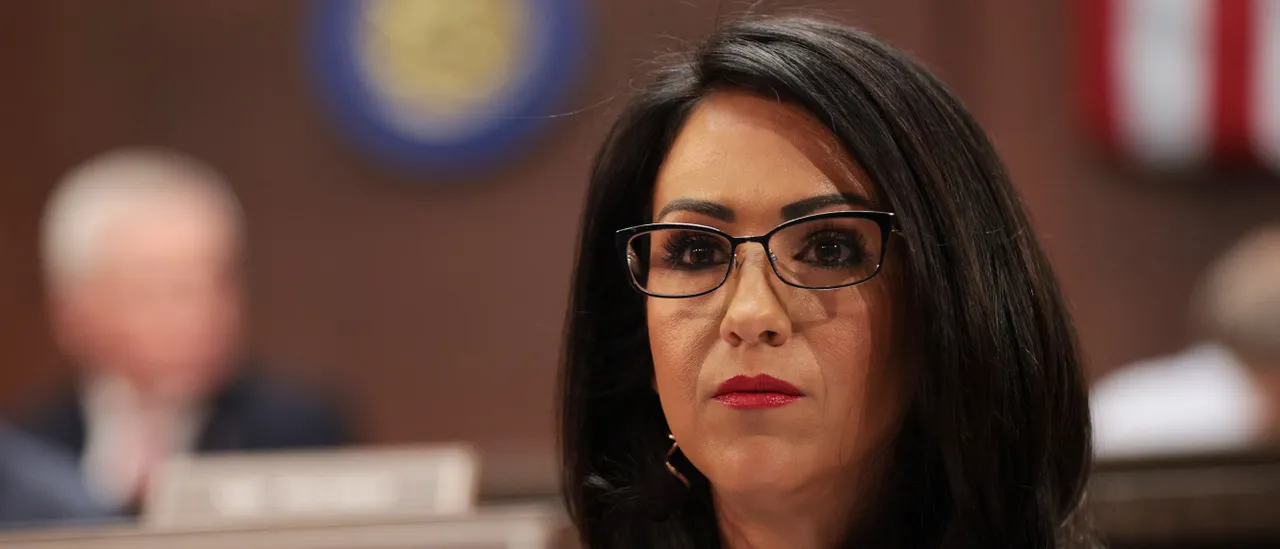
Congresswoman Lauren Boebert represents Colorado’s Fourth congressional district in the United States House of Representatives. Rep. Boebert serves on the House Oversight and Government Reform Committee and the House Natural Resources Committee.
The views and opinions expressed in this commentary are those of the author and do not reflect the official position of the Daily Caller.
Read more EXCLUSIVE: New Poll Shows Majority Of Texans Oppose Flock Cameras







Post Comment