Could The Trump Admin’s New Highway Power Plan Lower Your Electric Bill?
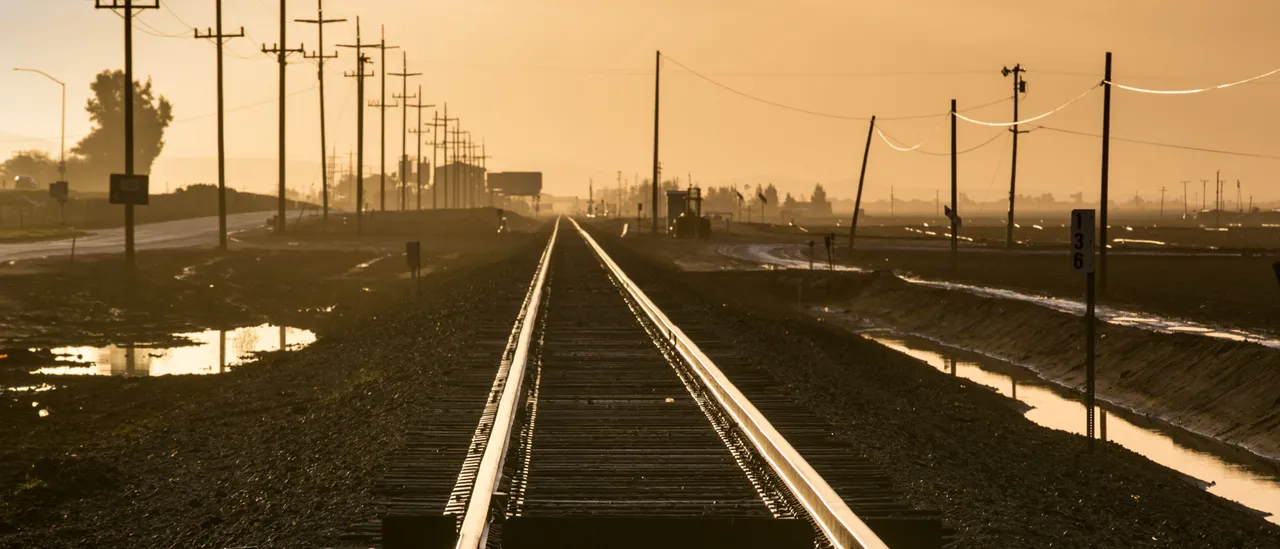
The Department of Transportation wants to lease highway and railroad land to private companies for power lines — a plan it says could potentially save Americans on their electricity bills.
Read more Catholic Nuns Sue Illinois Over Law Forcing Them To Help Terminally Ill Patients Kill Themselves
Transportation Secretary Sean Duffy announced America’s Great Corridors of Commerce (AGCC) on Aug. 26 in a press release as a way to speed up construction of transmission lines, fiber-optic cables, water lines and pipelines. The program would reduce infrastructure costs, place “downward pressure on residential user rates,” meaning lower electric bills for households, and generate lease revenue for transportation projects at no additional cost to taxpayers, DOT said in the release and in a request for information (RFI) published Aug. 18.
“By working with the private sector to combine our existing transportation network with transmission lines, fiber optic cables, and other critical infrastructure, we can make energy more affordable and fuel American industry for generations to come,” Duffy said in the press release. (RELATED: Trump Meets Oil Refiners As Gas Still Over $4 Amid Iran War)
A DOT official told the Daily Caller News Foundation that no corridors have been selected and that the department will run a competitive process to seek expressions of interest from state transportation departments and railroads. Savings would vary project by project, the official said, but clustering data centers and manufacturers along a single corridor would avoid piecemeal grid upgrades and protect “everyday ratepayers from the rate hikes typically needed to fund scattered upgrades,” meaning the cost of those grid upgrades would not be passed on to household electric bills.
The official also referred the DCNF to a Sept. 2 post on X in which Duffy wrote that the country has nearly 161,000 miles of highways and 140,000 miles of railroad track that have already gone through permitting.
“Why not make extra use of the land … as corridors for energy, fiber, other technologies of the future?” Duffy wrote.
The Association of American Railroads (AAR), whose freight members operate roughly 84% of the country’s freight rail mileage, told the DCNF that it is still assessing the initiative and expects to submit comments before the docket closes Sept. 12.
NextGen Highways, a coalition that supports placing transmission infrastructure along highways, did not respond to the DCNF’s request for comment.
State transportation departments and railroads would choose private “Corridor Managers” through public-private partnerships, according to the RFI. The managers would typically receive 30 year to 50 year concessions to build, finance and operate utility tunnels or aboveground infrastructure along transportation rights-of-way, and they would lease space to utility and telecommunications companies and share revenue with the right-of-way owners, the RFI states.
Rights-of-way are the strips of land that run alongside highways and railroad tracks and are controlled by states or railroads.
Participation in the program would be voluntary, and right-of-way owners would apply to have corridors designated by DOT, according to the department’s website. The department would provide selected corridors with technical assistance and help navigating federal permitting and financing programs, the website states.
Although DOT says AGCC would require no additional taxpayer spending, the RFI several federal loan programs that projects could use. Tunnels and conduits could qualify for loans through the Transportation Infrastructure Finance and Innovation Act or Railroad Rehabilitation and Improvement Financing programs, both of which lend federal money to infrastructure projects, and some utility equipment could also receive financing through Department of Energy or Environmental Protection Agency programs, according to the RFI.
Read more Judge Declares Mistrial In Lindsay Clancy Case After Lone Juror Refuses To Budge
The RFI also states that private companies could pay for the utility lines themselves “to avoid requiring compliance with certain federal regulations” that come with federal financing. The notice does not say which regulations it means.
The notice states that projects “will most likely” qualify for one or more categorical exclusions under the National Environmental Policy Act. A categorical exclusion is the lightest level of federal environmental review and generally requires less analysis than an environmental assessment or environmental impact statement, although the responsible agency would still have to determine whether a project qualifies, according to DOT’s website.
DOT also wants the corridors to attract data centers and manufacturers to nearby land by offering “plug and play” utility connections, according to the RFI. The department says on its website that utilities leasing space could avoid conducting separate procurement, environmental review and permitting processes for stand-alone lines. (RELATED: Local Mom Dragged Into Court For Trying To Obtain Info On Secret Data Center Deals)
The RFI does not guarantee lower electric bills, and the program’s effect on customers would depend partly on how regulators assign construction costs and whether lease revenue offsets them. State utility commissions regulate what customers pay for transmission and distribution, and those charges, the cost of delivering power through wires to businesses and homes, made up 44% of the average electric bill in 2025, according to the Energy Information Administration.
PJM Interconnection (PJM), the nation’s largest grid operator, more than 67 million people across 13 states and the District of Columbia, according to its website. PJM holds an annual capacity auction that pays power plants to be available during periods of peak demand, and utilities pass those costs to customers, the grid operator says. The total value of the auction from $2.2 billion for the 2023-24 delivery year to $16.1 billion for 2026-27, according to PJM’s report on the auction. PJM says in the report that the figure does not equal the total cost customers pay, since some electricity demand is hedged or supplied outside the auction.
PJM’s independent market monitor, Monitoring Analytics, actual and projected data center demand as the primary cause of tight supplies and high-capacity prices, according to an Aug. 13 report Monitoring Analytics released.
As part of its case for AGCC, DOT said in the press release that China built more high-voltage transmission lines during the past 15 years than the United States has built in its history. (RELATED: Pentagon Will Own 35% Of Venezuela Oil Venture, White House Reveals)
The Federal Highway Administration guidance in 2021, under the Biden administration, encouraging states to accommodate renewable energy, electrical transmission and other uses in highway rights-of-way, according to the agency. The guidance cited climate change, communications access and energy reliability, the agency said.
Railroads already process utility-access requests. CSX handles more than 3,000 permanent right-of-way applications annually across 26 states, Alex Saar, CSX’s director of corridor services, told the Fiber Broadband Association in 2024.
DOT will accept public comments through Sept. 12 and plans to seek proposals from right-of-way owners afterward, according to the RFI. The department expects to select up to five corridors in the first AGCC designation round, the RFI states.
Read more Pentagon Reportedly Escalates Hunt For Leakers By Ordering Polygraph Exams












Post Comment