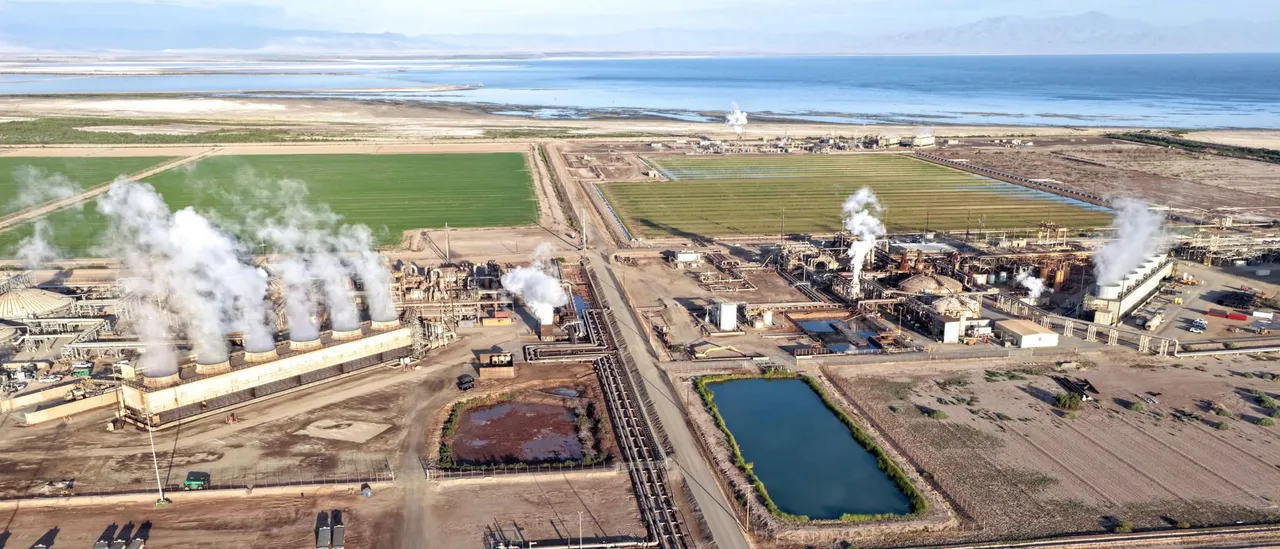
Tech Giant Wants To Power Massive Data Center With Geothermal Energy
Google is betting big on geothermal energy as a viable power source for its sprawling data center buildout.
Read more Chevron Drills Deeper Into Trump’s Venezuela Oil Push
Geothermal developer Fervo Energy on Tuesday signed the deal with Google for its Cape Station geothermal project in Utah, the Wall Street Journal reported, with the agreement showcasing big tech’s push for more reliable and clean energy sources to power energy-hungry data centers. The deal would provide Google nearly 400 megawatts, roughly enough power for a midsize city.
Geothermal energy, which has typically been hindered by high costs and longer development time, involves capturing heat inside the earth, according to the U.S. Energy Information Administration. Fervo plans to use oil-and-gas drillers to create geothermal areas deep in the earth for electricity, according to The Wall Street Journal. The Houston-based company plans to spend more than $2 billion for the Cape Station project and believes it will start delivering power to the Utah grid later in 2026, according to Fervo. (RELATED: House Moves To Unlock Largely Untapped Power Source Lurking Deep Inside Earth)
“The exciting thing for us is this has now infused us with the capital needed to actually grow at the pace we’ve always wanted to, to grow in terms of putting gigawatts on the grid and solving this energy challenge,” Tim Latimer, the CEO of Fervo, told the New York Times in May, believing that geothermal may help meet the country’s energy needs to power data centers.
The Trump administration in February announced a $171 million funding opportunity to seed the next generation of geothermal projects.
“Thanks to President Trump’s America First Energy Agenda, these demonstrations and drilling activities will help us realize the enormous potential of geothermal to spur domestic manufacturing, enable data center growth, and provide affordable, reliable, and secure energy solutions nationwide,” Department of Energy Assistant Secretary of the Hydrocarbons and Geothermal Energy Office Kyle Haustveit said that month.
The Cape Station project may expand geothermal energy access, although it remains twice as expensive as natural gas plants, according to the New York Times. Fervo’s financial filings, however, state that it would provide cheaper electricity compared to newer nuclear power plants.
Some question if geothermal hotspots may eventually cool off as water is pumped through them for electricity generation,forcing energy producers to drill new wells, which would raise costs. Others worry that it could create a higher risk of seismic activity or even contaminate local water sources.
“No energy source is completely devoid of environmental or public health risk,” Jeff Deyette, a clean energy expert at the Union of Concerned Scientists, said.
Google didn’t respond to a request for comment from the Daily Caller News Foundation.
Fervo is engaged in other geothermal projects; the company’sProject Red in the Nevada brought the companies together. The Cape Station’s power sharing agreement with Google is slated to come online in 2028.
Read more Pentagon Will Own 35% Of Venezuela Oil Venture, White House Reveals
“Even though right now we don’t have clarity yet on how this will serve a data center…we know that it will be a foundational building block of power generation for a data center presence in Utah,” Lucia Tian, Google’s director of advanced energy technologies, told the WSJ.
The search giant could expand its agreement to purchase an additional 600 megawatts by June 2030.
The United States has roughly 2.7 gigawatts of geothermal capacity, but could reach as high as 135 gigawatts with advanced drilling techniques typically used by the oil and gas industry, Reuters reported.
America has the “world’s largest technical enhanced geothermal capacity potential, while China has the second largest potential,” the International Energy Agency (IEA) said.
Permitting remains a headache for energy developers seeking to make geothermal energy plans. Many geothermal projects on federal lands could take as long as seven to 10 years, according to Geothermal Rising, a .
Ormat, a geothermal company, sought to build a power plant in Nevada. The company hit yet another hurdle when federal agencies, after fighting through the federal permitting process for roughly a decade, faced another stoppage as the Biden-era U.S. Fish and Wildlife Service issued an emergency order to protect a rare toad species in the area, according to the Washington Post. Ormat’s May 2026 investor presentation lists the project as “.”
Fervo’s partnership with Google amounts to a “validation of the role geothermal can play in meeting growing power demand,” Sarah Jewett, senior vice president, told Reuters in June.
“[We] believe the Google agreement establishes a repeatable commercial model to accelerate deployment,” Jewett added.
Other big tech companies have looked to geothermal energy. Meta signed deals with XGS Energy and Sage Geothermal Systems for two geothermal projects.
Big tech companies backing geothermal improves energy developers’ ability to get financing because “their credit worthiness is huge,” Cindy Taff, the CEO of Sage Geosystems, said.
Read more ‘Leadership Doesn’t Know Anything Else’: Why Are Suicide Rates In US Military So High?













Post Comment