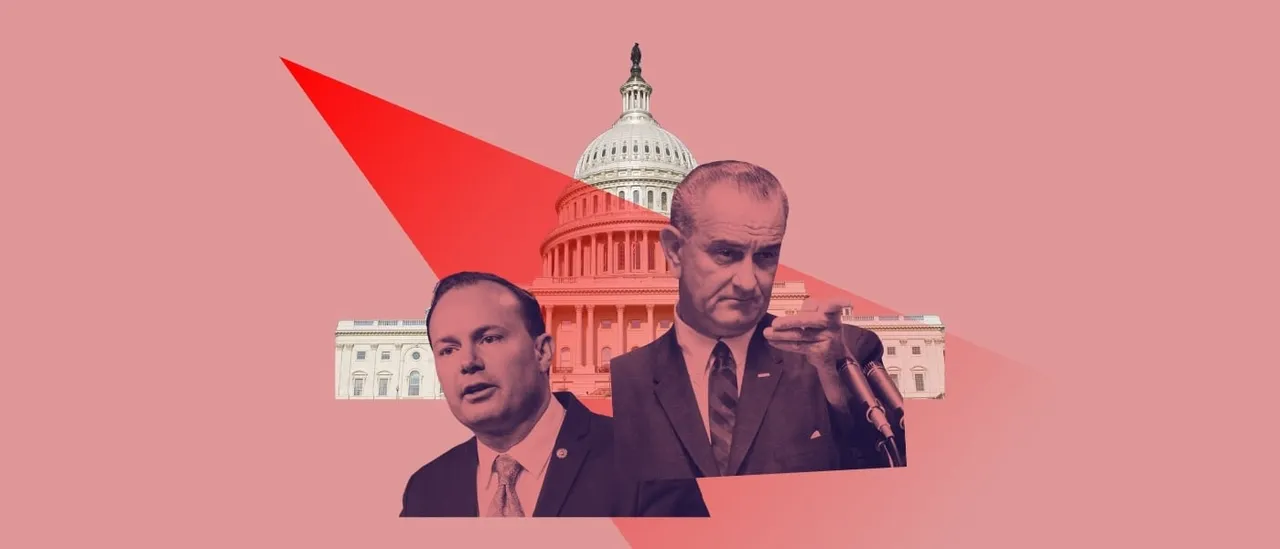
EXCLUSIVE: Mike Lee Explains How LBJ Broke A Filibuster And What It Means For The SAVE America Act
Republican Utah Sen. Mike Lee laid out how former President Lyndon B. Johnson’s battle to pass the Civil Rights Act of 1964 has important implications for the adoption of the SAVE America Act during an interview with the Daily Caller on Monday.
Read more Tech Giant Joins Forces With California Following Massive Feud With Trump
Lee, a leading advocate and sponsor of the SAVE America Act — landmark election integrity legislation supported by President Donald Trump — cited the Senate’s handling of the Civil Rights Act of 1964 as a historical example of how major legislation can advance even when the votes for cloture are not initially in place. (RELATED: Trump Cancels Housing Bill Signing Over SAVE America Act)
The Utah Senator explained that when the bill arrived in the Senate from the House in March 1964, supporters of the bill were still significantly short of the votes needed to invoke cloture — roughly 30 votes, though he noted even at the time the exact count was uncertain. As Lee explained, “It’s a good example because they were clearly not close to achieving cloture when it arrived.”
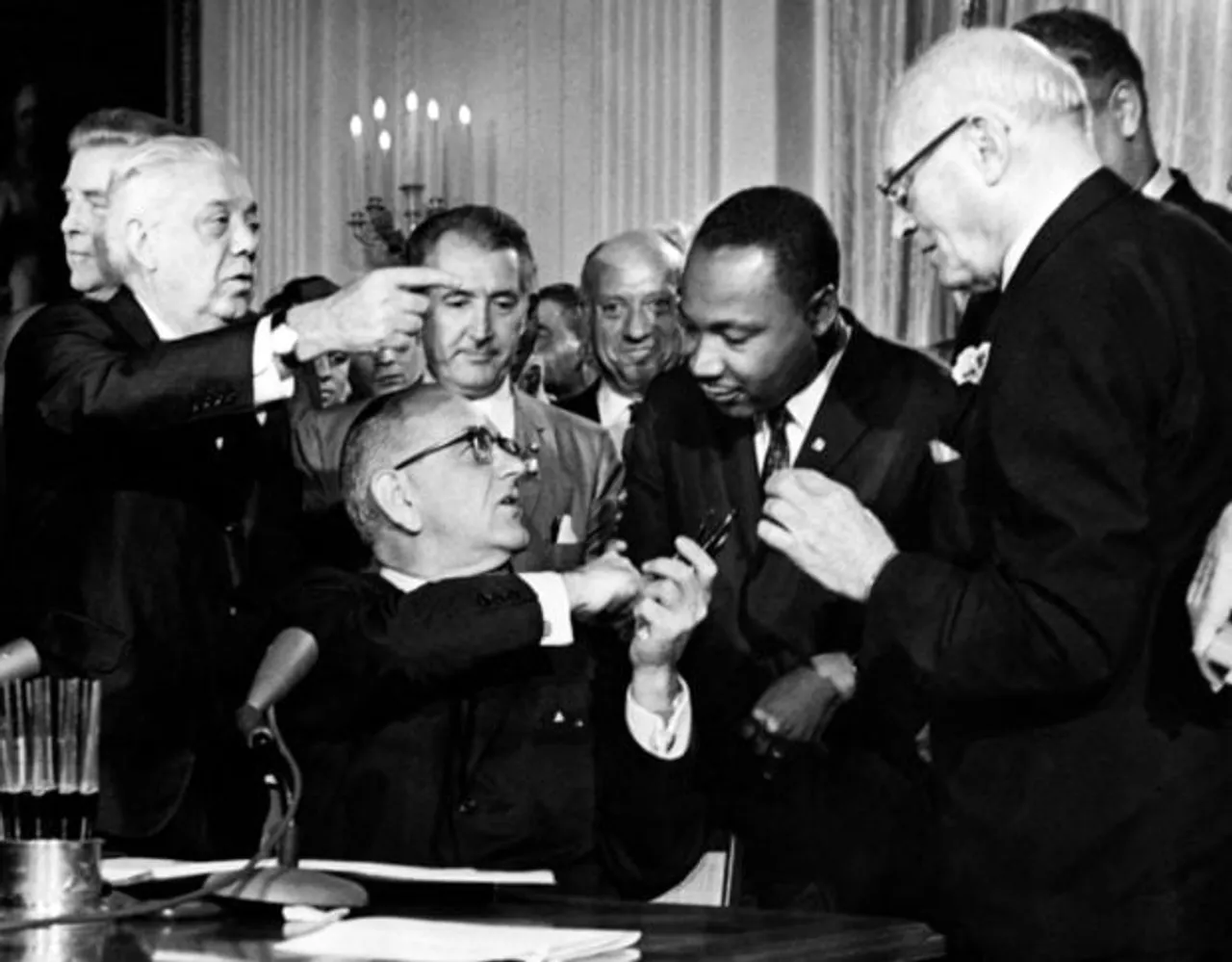
US President Lyndon B. Johnson hands a pent to the Rev. Martin Luther King (2nd-R) after signing the historic Civil Rights Act in the East Room of the White House, in Washington, D.C., 02 July 1964. The Civil Rights Act of 1964, signed into law by United States President Lyndon B. Johnson on July 2, 1964, put an end to all forms of segregation and discrimination based on race, color, religion, sex or national origin. (Photo by AFP) (Photo by -/AFP via Getty Images)
Drawing a parallel to his efforts to invoke the same talking filibuster to advance the SAVE America Act, Lee noted that then-President Johnson — a vocal supporter of the Civil Rights Act of 1964 — backed an aggressive floor strategy during the debate. At the time, Johnson urged Democratic Senate Majority Leader Mike Mansfield to keep the Senate in continuous, round-the-clock session to wear down opposition, a tactic LBJ had previously used as majority leader to advance civil rights legislation, according to a U.S. Senate historical report.
Mansfield, however, rejected the proposal.
He argued that marathon sessions would turn the Senate into “a circus or a sideshow,” warning that the sight of senators appearing in “bedroom slippers, without neckties, with hair uncombed and pajama tops sticking out” would diminish the chamber’s dignity.
Rather than forcing continuous debate, Mansfield allowed the fight over the legislation to unfold over more than 50 days, insisting on preserving the Senate’s “dignity and decorum” while keeping the bill on the floor until supporters ultimately secured enough votes to invoke cloture. In effect, grinding most other Senate business to a halt.
Rather than personally managing every moment of the floor fight, like Johnson, Mansfield delegated much of the day-to-day debate to key allies, including soon-to-be Vice President Hubert Humphrey — then still a Democrat senator for Minnesota — and Democratic California Senator Thomas Kuchel, while he coordinated the broader legislative strategy behind the scenes.
Mansfield believed the lengthy debate served an important purpose. With many senators still undecided, he viewed the Senate as a deliberative body where extended discussion could persuade Democrat lawmakers and help opponents ultimately “accept the legitimacy of the outcome,” according to the Senator. (RELATED: House Cancels Votes As GOP Holdouts Revolt Over Failure To Pass SAVE America Act)
Asked whether he sees parallels between Mansfield’s strategy and the approach the current GOP Senate should take to advance election integrity legislation, Lee said he does, though he noted there are important differences between Mansfield’s effort and the current Senate under Republican Majority Leader John Thune.
Read more Union Spokesman Threatens Death By Firing Squad For Democrats Opposing Graham Platner
“I mean, you did have the majority leader who was saying, ‘I’m willing to do this, and that is what it takes.’ In the modern Senate, you do need the support, active involvement, and engagement by the Senate Majority Leader in order for this to work,” Lee said.
Lee went on to note that one of the “distinct privileges” of the leader is to set the chamber’s schedule, and a talking filibuster is a “significant scheduling commitment.”
Lee said that during the 1964 legislative debate, Senate Majority Leader Mike Mansfield reinforced his commitment to ensuring passage by making it clear the chamber would remain on the bill for as long as necessary. To Lee’s understanding, Mansfield told senators, “We’re going to do this. We’re going to pass it, and we’re going to debate this for as many weeks as it takes in order to pass it. And they stayed in week in, week out.”
Noting he believes the Senate often debated on Saturdays and typically recessed on Sundays for church attendance, but otherwise remained in continuous session, he said it became increasingly clear Mansfield would not back down, “And they saw that he meant it, especially when you get into it that far. When you get weeks into it, it’s, ‘oh my gosh, he’s not messing around. This is serious.’” (RELATED: Senate Ditches Town Early For Two-Week Recess As Save America Act Remains On Ice)
With national attention focused on the Senate, supporters of the Civil Rights Act of 1964 used the prolonged floor debate to build momentum for the legislation, while opponents relied on extended debate tactics in an effort to delay or weaken the bill.
When the bill’s supporters briefly failed to produce enough senators for a quorum call, Mansfield privately admonished colleagues, reminding them that “there comes a point in time when certain procedures must, in the best interest of the Senate, be laid down.” Attendance quickly improved.
Lee, who has faced pushback from his own party for his support for this approach, responded to criticism over why the Senate should prioritize the measure even with GOP control of both the legislative and executive branches. The Senator, responding to Thune and Republican Texas Sen. John Cornyn’s argument that Republicans lack the votes, told the Caller that cloture is just one way to break a filibuster — and when you use only that method of breaking the filibuster — after a while, you can become convinced that it’s the only way. But it’s not the only way.”
The talking filibuster employed against the Civil Rights Act only lasted roughly 54–60 working days, or up to about 75 calendar days by some counts, beginning in late March 1964 and ending with final Senate passage on June 19, 1964. (RELATED: ‘Cluster F*ck’: Trump’s Dramatic Feud With Senate Republicans Boils Over)
Lee cites the episode and use of the talking filibuster to pass the Civil Rights Act of 1964 as a blueprint for how sustained floor debate and prolonged pressure can still, more than six decades later, be used to advance major legislation like the SAVE America Act.
Read more Supreme Court Takes Up Major Semiautomatic Firearms Case












Post Comment