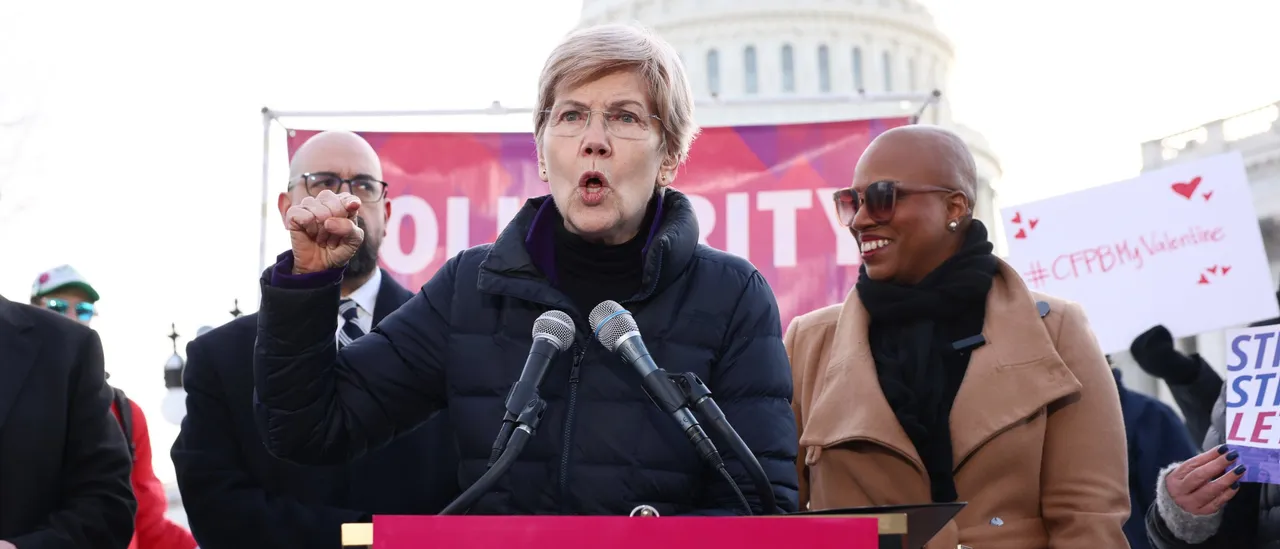
The Agency Elizabeth Warren Built Now Advances Trump’s Agenda
The Consumer Financial Protection Bureau (CFPB), the brainchild of Democrat Massachusetts Sen. Elizabeth Warren, was co-opted by the Trump administration to achieve its own goals in the fight against illegal immigration.
Read more Mamdani’s Immigrant Map Somehow Misses Three Groups That Defined NYC History
Guidance by the CFPB last month reminded creditors of their obligations to “assess consumers’ ability to repay before offering mortgages and certain open-end credit products,” specifically noting that they should consider “consumers’ immigration status, especially where removal from the United States may disrupt the consumer’s income.” (RELATED: Democrats Plot Eleventh-Hour ‘Gerrymandering’ Effort To Oust Blue State’s Sole Republican Rep)
The guidance then goes to great lengths to clarify that immigration status should be taken into account when judging a consumer’s ability to repay, as undocumented immigrants may lose their employment or be deported at a moment’s notice, leaving the loan unpaid.
After beginning his second term, President Donald Trump’s DOGE team set its sights on dismantling the bureau, with Trump’s de facto head of the program, Elon Musk, calling to “Delete CFPB,” adding, “There are too many duplicative regulatory agencies.”
However, after not being able to eliminate it altogether, the Trump administration decided that the next best response was to gut the CFPB and use the bare-bones agency that remained to push the president’s own agenda by targeting lenders that the bureau’s acting director, Russell Vought, has called “woke,” according to The Washington Post.
A spokeswoman for Vought framed the bureau’s new direction as a correction of Biden-era overreach, telling the Post that the administration is “bringing the agency back to operating within statute and away from breaking the law, and making cases right to help small businesses and Americans who were victims of this thuggery.”
The bureau, which began operations in 2011, was created in response to the 2008 Great Recession in an effort to consolidate regulatory authority to protect citizens from predatory credit cards and mortgages under a single agency.
Read more Taco Bell Locations Pull Ingredients After Surge In Cyclospora Parasites
Warren, who was a Harvard law professor at the time, worked closely with the Obama administration and congressional Democrats to write the bureau’s founding bill and drafted essays in its defense.
Wanting Warren in charge of the CFPB, but believing Republicans and moderate Democrats would filibuster her formal confirmation, President Barack Obama appointed Warren assistant to the president and special adviser to the Treasury secretary on the CFPB, where she could operate as the de facto architect of the bureau.
Leading up to its launch, Warren recruited its initial staff, set up its data systems and consumer complaint hotline, and established its initial enforcement priorities.
However, Warren stepped down after Obama nominated Richard Cordray as the bureau’s first official Senate-confirmed director. At the same time, Warren used the momentum to begin a successful run for the U.S. Senate.
Still, Trump’s CFPB takeover has raised concerns — especially from the agency’s originator and those skeptical of the power wielded by America’s largest banks. Now the Ranking Member of the Senate Banking, Housing, and Urban Affairs Committee, Warren accused the Trump administration in May of undermining post-recession “safeguards” by allowing 26 of the 31 largest national banks to be exempt from protective regulation requirements.
“This proposed rule weakening governance and risk management standards comes against the background of a broader, big bank deregulation” Warren warned, adding that “This toxic mix of big bank deregulation is occurring at a precipitous moment–and the American public will likely pay the price in future economic downturns.”














Post Comment