Could The Suppression Of Suppressors Be Coming To An End?
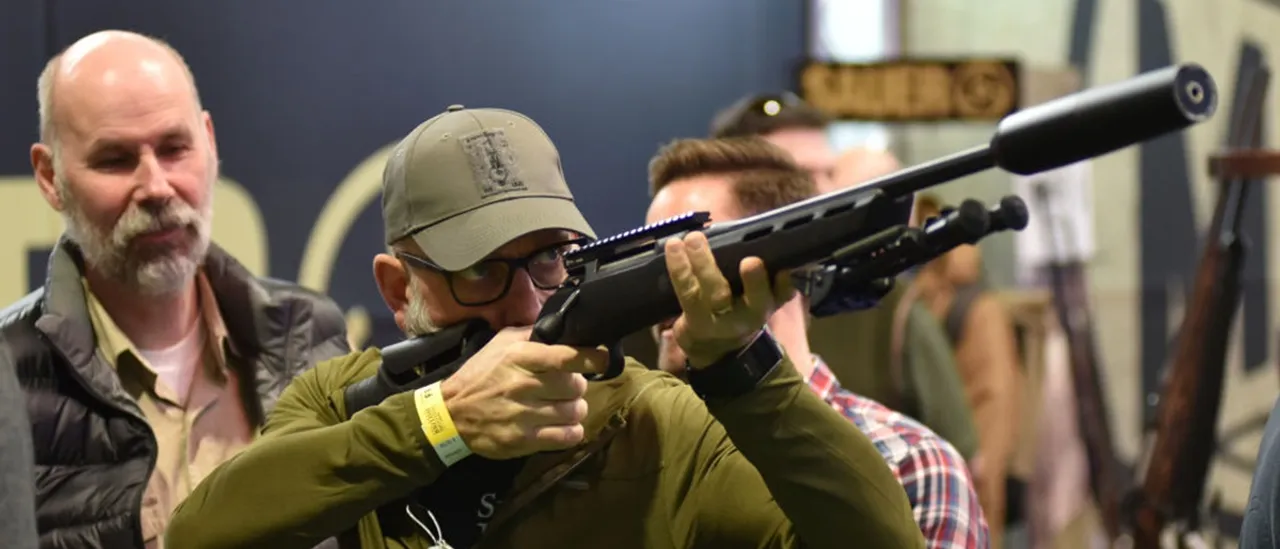
The heroic actions of an armed citizen during a Saturday shooting at an Idaho restaurant received praise, but the accessory on his pistol also ignited discussion about why suppressors are often targeted by anti-Second Amendment politicians and groups.
The armed citizen, identified as Jordan Salinas, engaged the gunman using a suppressed semiautomatic handgun identified by the Idaho Statesman as a FN Five-seveN semiautomatic pistol. This incident may have captivated the news cycle, but suppressors, which have been regulated tightly under the National Firearms Act, have become more popular in recent years, although they have been in use for almost 125 years. (RELATED: You May Have Missed It, But DOJ’s Making Big Admissions About Suppressors In Legal Filings)
“On Saturday, a gunman opened fire at a crowded Twin Falls In-N-Out. In that moment, Jordan Salinas drew his firearm, took aim, and ran toward the shooter,” Republican Idaho Attorney General Raul Labrador posted on X Sunday. Salinas and an off-duty police officer together drove the shooter off the property, giving families and employees the chance to escape. Their courage, without a doubt, saved lives.”
Suppressors, though, aren’t only being used for personal protection. One market where suppressors are selling like hotcakes is with hunters, where a suppressor not only helps protect against hearing loss caused by the noise of gunshots, but also improves accuracy and reduces recoil, according to Hook and Barrel. Forty-One states now allow hunters to use these devices. Former President Theodore Roosevelt used a Winchester rifle with an early suppressor at his Long Island home so as to deal with varmints without bothering his neighbors.
Suppressors are also becoming more popular on ranges as a hearing protection device that enables range officers to address safety issues or for trainers to provide instruction. The number of privately-owned suppressors jumped from about 285,000 in 2010 to over 3.5 million in 2024, according to Guns.com, despite a lengthy processing period, and the requirement to pay a $200 transfer tax.
Since 2024, though, sales have exploded due to improved processing and a reduction of the transfer tax to $0 in the One Big Beautiful Bill Act. The National Shooting Sports Foundation now estimates the number of privately owned suppressors in the United States has reached 6.1 million – and climbing.
Even though the first suppressor was invented in 1902 by Hiram Percy Maxim for the purposes of protecting the hearing of those who shoot as well as to enable people to enjoy target shooting without disturbing others, the National Firearms Act slapped them with a $200 tax stamp requirement that brought sales to a near-halt among civilians in 1934, according to Small Arms Review. Back then, though, silencers were not a topic of debate, the outlet reported, yet some still have tried to ban them.
Read more Abdul El-Sayed Ekes Out Victory In Closer Than Expected Michigan Primary
Legislation introduced by Democratic New Jersey Rep. Bonnie Watson Coleman in June would have made Salinas’ possession of the suppressor illegal. Coleman announced the re-introduction of the HEAR Act, which would enact an Australia-style “buyback” of suppressors, in a release.
“Silencers are not tools of self-defense, they are tools of murder,” Watson Coleman claimed. “They have no legal application which is why law enforcement officials around the country have been calling for their elimination. The HEAR Act will save lives and is part of the common sense approach to firearms legislation that polls show has widespread support among voters on both sides of the aisle.”
Democratic Connecticut Sen. Chris Murphy instead chose to introduce an amendment to raise the tax on suppressors and other items covered by the NFA to just over $4,700 in an amendment to a government spending package in January, but the amendment never made it into the legislation. Such efforts could be rendered moot by admissions the Department of Justice (DOJ) has made in recent legal filings with a federal appeals court.
“Silencers are susceptible to criminal misuse because they make it harder for victims or law enforcement to identify or detect the source and direction of gunfire, such as in drive-by or mass shootings or assassination attempts,” the DOJ said in a July in Comeaux v. United States, a case centering on possession of an unregistered suppressor. “This is not to say that silencers are widely used for criminal purposes — their beneficial use is overwhelming in relation to their criminal use.”
The DOJ’s May 2025 supplemental brief in Peterson v. United States, another case involving charges of possessing an unregistered suppressor, admitted that suppressors and other firearms components and accessories were protected under the Second Amendment, and included the same language from the July filing regarding the lawful use of suppressors. (RELATED: Pro 2A Groups Applaud ATF For Stepping On Gas To Fast-Track Notoriously Slow Form Processing Times)
“In the view of the United States, the Second Amendment protects firearm accessories and components such as suppressors,” the DOJ said. “As a result, restrictions on the possession of suppressors burden the right to bear arms, and a ban on the possession of suppressors or other similar accessories would be unconstitutional.”
Read more Mike Lindell Steps Down As MyPillow CEO To Focus On Bid For Minnesota Governor



Post Comment