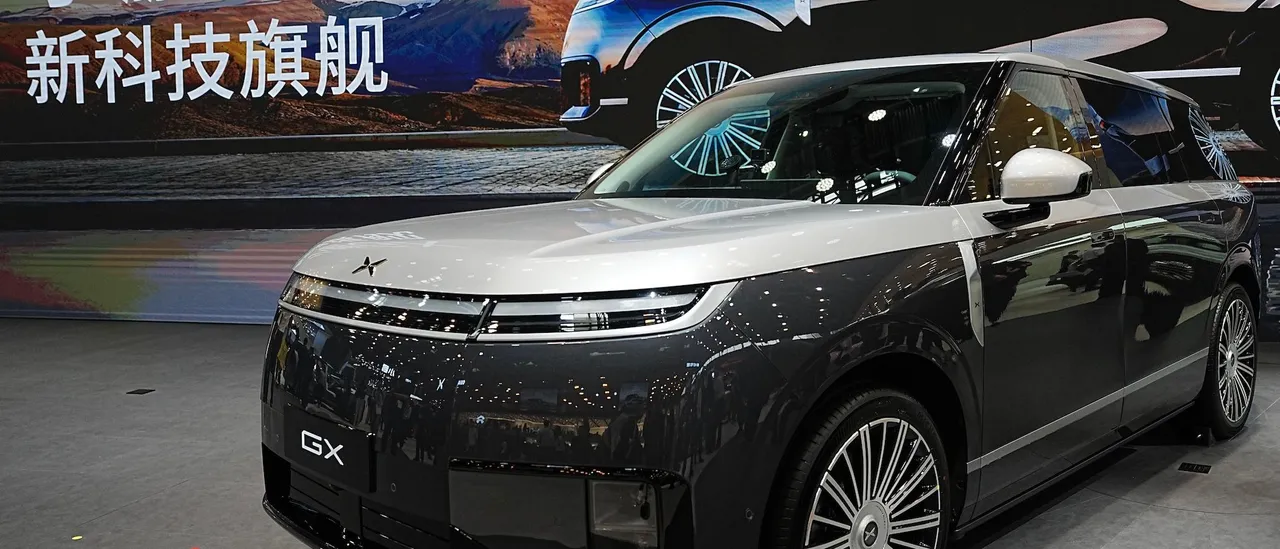
Cheap Chinese ‘Surveillance Machines’ Cannot Flood US Car Market At All Costs
When China was granted most favored nation status in 1997 and allowed into the World Trade Organization in 2001, the American people were promised such moves would lead to China becoming more democratic and peaceful, provide protections against theft of intellectual property, result in America manufacturing and exporting more goods to China, and there would be no loss of domestic manufacturing.
Read more Video Shows US Military Take Out Three Iranian Tankers After Regime Targeted American Warships
Of course, none of these things have happened.
In fact, it’s been the opposite. Today China is the top threat to the United States of America, and they are working around the clock to overtake America in every industry. One of the most significant industries under threat is auto manufacturing.
Automaking is America’s largest manufacturing sector. Every $1 added to the economy by motor vehicle manufacturing creates an additional $4.23 in economic value. Every direct job in vehicle manufacturing supports another nine American jobs. In total, the auto industry employs 10 million Americans in all 50 states, generates 5% of GDP and drives $1.2 trillion into the economy annually.
But China’s worldwide strategy of automotive manufacturing and supply chain expansion — directed by the Chinese government and rooted in state subsidized, unfair, anticompetitive trade practices, intellectual property theft, and documented cybersecurity and surveillance risks — has been successful.
China has become the world’s largest vehicle producer, vehicle market, and automotive exporter, owning nearly 35% of global production. In 2024 alone, China produced 31 million vehicles, which is three times more than the United States. (RELATED: Trump Admin Sounds Alarm On Global Chinese AI Expansion)
This extends into the electric vehicle market, with China dominating global battery cell production. In fact, China is projected to account for 4,402 GWh of battery cell production capacity in 2030 — more than North America, Europe, and Asia (ex-China) combined. Of course, in some ways we have invited China’s dominance, especially when it comes to electric vehicles.
In 2021, President Joe Biden signed an executive order requiring that 50% of new vehicle sales be zero-emission by 2030. Later in his term, he pledged that his administration would work toward the full electrification of the federal government’s 650,000-vehicle fleet.
These sorts of policies set the stage for Chinese automakers to flood the U.S. market with their cheap EVs. That’s exactly what’s happening in Mexico and Europe where Chinese automakers and suppliers have rapidly expanded their presence.
Most Chinese vehicles incorporate an array of sensors and significant computing and telecommunications capabilities. Allowing vehicles manufactured by Chinese companies into the U.S. market raises the risk that sensitive data could be accessed, aggregated, or exploited by the Chinese Communist Party.
In other words: We could have cheap, Chinese surveillance machines on our streets, in our communities, and near our military bases, spying on our families while parked in our home garages, and sending our personal data back to Beijing.
Read more Could The Trump Admin’s New Highway Power Plan Lower Your Electric Bill?
Thankfully, the current occupant of 1600 Pennsylvania gets it.
On his first day in office, President Trump rescinded the previous administration’s EV orders, signaling we would no longer be a pawn in China’s quest for EV dominance game. The president and his administration have held the line, most recently at the Beijing summit back in May. But it is essential that the U.S. remain vigilant and clear-eyed about the economic and national security risks Chinese vehicles present.
President Trump must reject any attempt by Chinese manufacturers to circumvent existing restrictions, including Section 301 tariffs and the Department of Commerce’s connected vehicle rule, by establishing production facilities in the U.S. The market distortions and risks to the auto industry in the U.S. are fundamentally the same whether these vehicles are imported or produced domestically.
Congress must do its part, too.
Perhaps surprisingly both houses (and both parties, no less) have already sent a clear message that China’s strategy to dominate global automotive manufacturing deserves a national security policy response from the American government.
Both the Senate and House are considering plans to ban Chinese vehicles from the U.S. In fact, the bipartisan Connected Vehicle Security Act of 2026 was recently approved by the Senate Commerce Committee, and the House Energy & Commerce Committee approved its own China vehicle ban earlier this year. That’s a good start.
It is critical that we come together and reaffirm to China and to the world that the United States remains the strongest and most powerful nation in the world.
Let’s start with ensuring no Chinese surveillance of American families here at home.
Mr. Gray is the CEO of American Global Strategies LLC served as Deputy Assistant to the President and Chief of Staff of the White House National Security Council, 2019-21.
The views and opinions expressed in this commentary are those of the author and do not reflect the official position of the Daily Caller News Foundation.
Read more Catholic Nuns Sue Illinois Over Law Forcing Them To Help Terminally Ill Patients Kill Themselves













Post Comment