FDA’s Vaping Non-Enforcement Decision Is A Welcome Mat For Rule Breakers
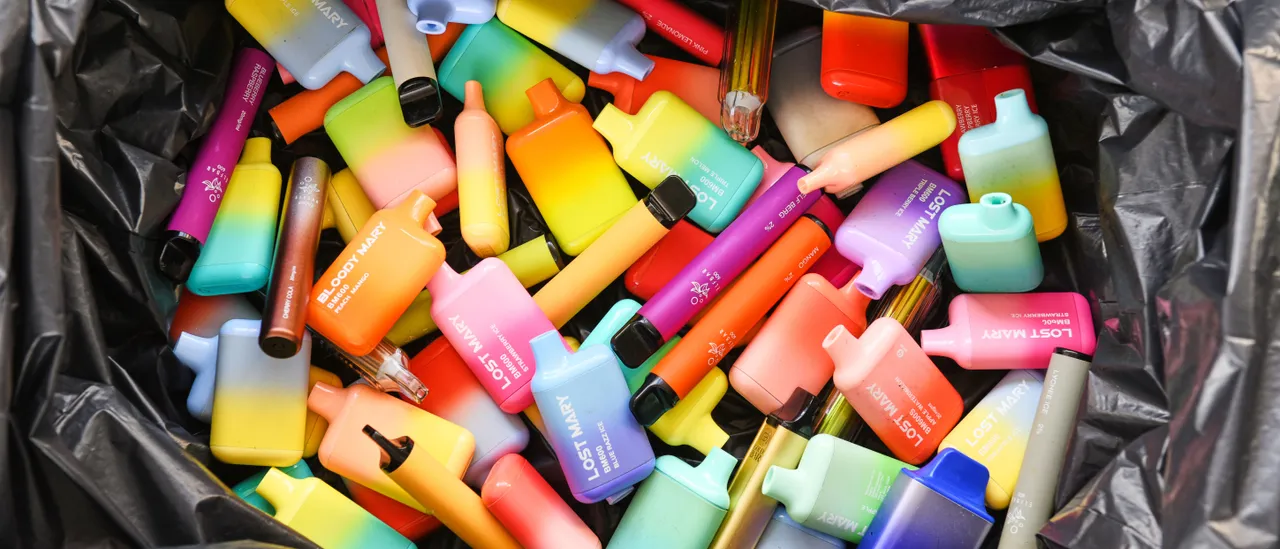
Anyone who’s been inside a gas station convenience store has probably noticed a shelf lined with vapes. The vast majority of them aren’t legal. In fact, of the roughly 6,000 e-cigarette products available in the U.S., only 48 are lawfully for sale.
Read more Trump Eyes Iranian Target That Would Probably Take A Nuke To Totally Destroy
When the Food and Drug Administration (FDA) loosened its enforcement policy for vapes in May, it tacitly invited the makers of the several thousand unapproved vapes to start breaking the law. We’re now seeing the results of that non-enforcement come to life, with manufacturers openly selling unauthorized products. Nothing about the law changed. Selling those products is still illegal. The FDA simply announced it will not act.
The agency said it would “create and maintain a publicly available list” naming the unapproved products it no longer intends to prioritize for enforcement. More than three months on, there is no list. The list was the policy’s only accountability mechanism, the one measure that would let the public see the scope of what the FDA had waved through.
There is an obvious explanation. Publishing it would require the FDA to say out loud how many unauthorized products it has decided to leave alone, and the number is likely not small. An agency confident in a policy publishes the roster. An agency that suspects the roster is the story does not.
On May 8, the FDA put the guidance into effect immediately, skipping public comment on the theory that “prior public participation is not feasible or appropriate.” Under it, a manufacturer whose application has merely been accepted for review can keep selling while the review drags on.
Acceptance does not mean that a product has been found to be safe or effective. FDA’s own guidance calls them “threshold determinations indicating the application contains sufficient information to support scientific/substantive review.” That is a judgment about the paperwork, not the product. In July, the FDA was sued over it.
The missing list matters. Without it, no one outside the agency can tell an authorized product from a tolerated one from a flatly illegal one. A retailer, a distributor, a state enforcement officer, a customs agent, a customer: all of them are now guessing. So is every company that did it the legal way. The FDA has effectively signaled to the manufacturers of those thousands of products that a paperwork filing may be enough. To hell with the companies that have waited years and spent the millions of dollars needed to develop a quality product and put it through the rigorous federal approval process.
We don’t yet know who is on the FDA’s non-enforcement list; we may never. Could it include Charlie’s Chalk Dust, which turned up on the FDA’s own exhibitor roster when the agency warned the Las Vegas Convention and Visitors Authority in April about unauthorized products at a trade show? How about Elf Bar and Lost Mary, the Chinese-made disposable vapes behind 80 FDA warning letters and, by the FDA’s count, more than half of youth e-cigarette use?
Read more Burglar Finds Out Hard Way He Picked Wrong House
Here is the part that should bother people who have never touched a vape.
China does not just smuggle vapes. The Justice Department has indicted China-based chemical companies for shipping fentanyl precursors while “mislabeling the contents of shipments to ensure the illicit chemicals and controlled substances went undetected.” Republican Arkansas Sen. Tom Cotton has asked the U.S. Attorney General to investigate counterfeit drug ingredients “entering the United States from unregistered foreign entities, primarily in Communist China,” citing 60 shipments of counterfeit anti-obesity ingredients and 38 Americans sickened or killed by them. Republican North Carolina Rep. Richard Hudson led a bipartisan letter demanding that the FDA use the authority it already has. Same country, same ports, same trick of lying on the manifest.
FDA has now put in writing that when its backlog grows long, it will simply look the other way on products that the law requires authorization for. That is a principle, and principles travel. Every agency sitting on a queue it cannot clear just watched a template get published in the Federal Register.
The fix is not complicated. The FDA should decide applications within the 180-day clock Congress set for it, rather than suspending the consequences of failing to do so.
Lawmakers should ask the FDA’s top officials whether they’ll publish the list or rescind the agency’s guidance. A regulator that won’t say who it has stopped policing owes the public answers.
Jared Whitley is a longtime D.C. and Utah politico and award-winning political writer, having worked in the office of Sen. Orrin Hatch, the Bush White House, and the defense industry. He has an MBA from Hult International Business School in Dubai.
The views and opinions expressed in this commentary are those of the author and do not reflect the official position of the Daily Caller.
Read more Meta Wants Its New AI Agent Inside Your Inbox, Browser And Wallet










Post Comment