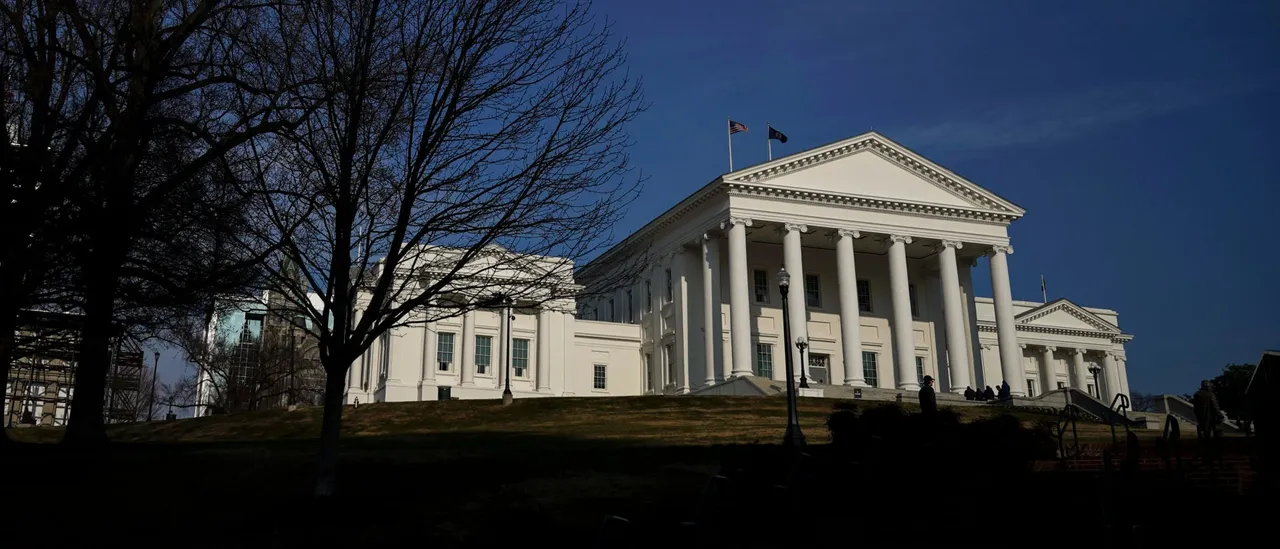
Congregants At Historic Slave-Owning Church Do Everything But Self-Flagellate In White Guilt Pilgrimage
Congregants of a predominantly white Virginia church took part in a black-led “slave trail” walking tour through Richmond to confront their congregation’s history of slave ownership.
Read more Former Wimbledon Champion Marketa Vondrousova Suspended Until 2030 For Refusing Doping Test
An article from the Religion News Service (RNS) detailed the “historical and spiritual pilgrimage” that took place June 13, interviewing members of St. Paul’s Episcopal Church and a neighboring “nonwhite majority” congregation that participated in the event. (RELATED: Democrat Senator From One Of America’s Whitest States Does African Dance For Juneteenth)
The church’s website says that “nearly all” of the congregants at St. Paul’s were enslavers, and that it had been attended by many leading Confederate figures.
Jerry Gilbert, a co-chair of the pilgrimage, told RNS that members of St. Philip’s Episcopal Church — a congregation founded by enslaved and freed blacks — were invited to join the tour because “white privilege is very blind to seeing all of the aspects of a situation when race is involved.”
The daylong retreat, called “Walking With the Enslaved: The Church’s Role in Slavery Pilgrimage,” began with an introductory session at St. Philip’s before approximately 20 participants set out to explore Richmond and the church’s historical ties to slavery.
According to RNS, participants silently marched in line, often holding onto one another, as they retraced the muddy path enslaved people would have walked in chains. A gospel singer was charged with performing African American spirituals to help build immersion during the roleplaying.
The group then traveled from site to site as guides recounted stories from Richmond’s slave-trading past to the white congregants.
In a sermon the following day, Rev. Brent Melton compared the experience to the Stations of the Cross — a Christian devotional prayer that recounts the path Jesus took to Calvary while carrying His cross before His crucifixion.
In his comparison, Melton said the pilgrimage included a simple liturgy, music and a gradually unfolding narrative. He described it as “a God experience of movement with strangers” and said participants were engaged in bringing “God’s kingdom near.”
Read more Rubio Dispatched To Middle East Amid Ongoing Iran Talks
One stop took the group to Capitol Hill, where St. Paul’s is located and where participants were told that many leaders of Virginia’s slave trade were affiliated with Episcopal and Presbyterian churches.
The group was later asked to consider how Christians had reconciled their faith with support for slavery before joining in a prayer asking God to “enlighten the eyes of our hearts.”
The pilgrimage concluded at the Shockoe Bottom African Burial Ground, built around the site of a former slave jail and now overshadowed by Interstate 95. One guide, Glyn Hughes, described the interstate’s construction as “infrastructural violence” and a reminder of continued harm against black Richmonders. Hughes said the project severed the historically black Jackson Ward neighborhood from Sixth Mount Zion Baptist Church in 1958.
Melton’s wife, Monica, told RNS that a moment of silence at the burial ground led her to reflect on a recent U.S. Supreme Court ruling that race could not be used as the basis for drawing congressional maps in Louisiana. She said the decision left her concerned about the political power of black voters and asking herself, “Where is my voice? Like, my political voice.” (RELATED: Supreme Court Strikes Down Institutionalized Racism)
Renee Munford, a descendant of slaves who joined the pilgrimage, told RNS she had been “bitter towards the whole reconciliation thing” after witnessing failed attempts at racial reconciliation in the past.
But after taking part in the walk, Munford said she found herself thinking less about those disappointments and more about the participants’ willingness to engage with the experience.
“You’ve got these white people that are interested enough to take out time on their Saturday and go through this process with us,” she said.
Read more California Democrat Pushes Bill Increasing Cost For Government Records Requests







Post Comment