California Employs An Army Of DEI Officials In Fake, Cushy Jobs
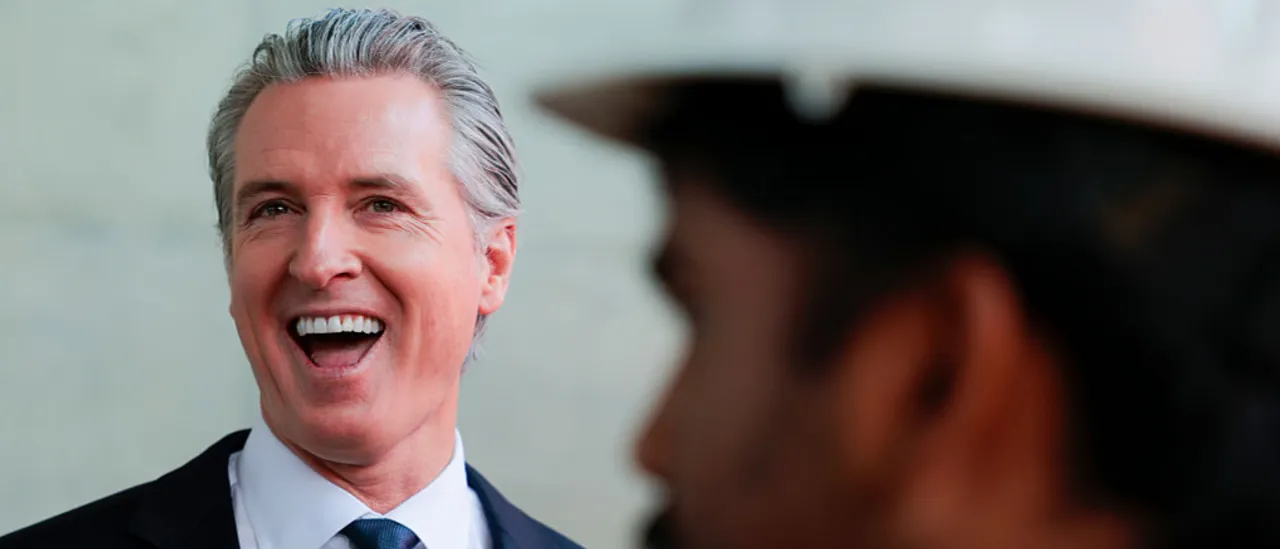
Diversity, equity, and inclusion programs in California have enabled 20 top officials appointed by Governor Gavin Newsom to collect a combined $3.2 million in annual salaries.
Read more Harmeet Dhillon Pounces On US Territory’s Semi-Auto Ban After Key Ruling
The figures come from a by the California Department of Human Resources listing political appointees in the Newsom administration and their compensation.
While these 20 individuals are surely delighted with their six-figure salaries, most California taxpayers would be disappointed to learn how little they accomplish. Moreover, a few million in salaries represents a fraction of state spending on DEI when accounting for support staff, benefits, consultants, grants and other programs.
Should Newsom run for president, voters could get a preview of how DEI bureaucrats inject their political priorities into government by examining his record in California.
The state’s cushiest DEI positions have several attributes in common. Attending meetings, drafting plans and reports, and holding discussions account for much of the “work” performed by these offices.
Discussions are indeed very important at the California Department of Cannabis Control, where a Deputy Director of Equity and Inclusion assists minority business owners in the industry.
Among his duties is hosting conversations with marijuana entrepreneurs on a program called “Cannabis Conversations.” Selected business owners are likely happy to participate, given California’s $35 million equity program. That pot of money is reserved for people whom the state considers disproportionately harmed by the decades-old war on drugs and other historical inequities.
The department also features Kika Keith, whom the Los Angeles Times profiled in a fashion shoot and described as the “top equity advocate in California’s cannabis industry.”
Her 2025 documentary is called “Kiss My Grass.” This diva proudly describes herself as the first black woman to own a social equity dispensary in LA, because, as she puts it, “our people have never been allowed to partake in the economic upside of industries such as cotton, alcohol, and tobacco…”
The state even maintains a website allowing consumers to locate “equity” marijuana businesses.
Other favored industries also receive dedicated DEI attention. The state’s economic development office has a zero-emission vehicle (ZEV) equity team, where a ZEV equity advocate spearheads an action plan intended to improve access to electric vehicles and charging infrastructure in historically underserved communities.
What is harder to find are measurable results showing how many charging stations the program has installed in inner-city neighborhoods or whether it has increased electric-vehicle ownership in targeted ZIP codes.
Two officials with nearly identical responsibilities coordinate DEI efforts across state government.
California’s first chief equity officer is tasked with developing a “framework” for coordinating government services fairly. Meanwhile, the state’s Racial Equity Commission employs an executive director who oversees support staff and released its own “Racial Equity Framework” last year.
Read more Meet The Democrats Who Voted For The NDAA And SAVE Act … And The Republicans Who Voted Against Them
Why the state needs two officials producing two equity frameworks remains unclear.
Also aboard California’s DEI personnel bus are senior officials assigned to transportation, health care, social services, education, emergency services and environmental protection.
The California Governor’s Office of Emergency Services has its own chief equity officer. It is difficult to understand why coordinating the state’s response to wildfires, earthquakes and other natural disasters requires a dedicated equity bureaucracy, but in California, it apparently does.
The agency’s “commitment to equity statement” asserts “everyone deserves access to emergency services, no matter the barriers.”
That commonsense principle raises an obvious question: Why does the agency need a six-figure equity official to ensure it performs one of its most basic duties?
California’s health-related agencies employ numerous DEI political appointees. The state has a chief equity officer, a program director for equity and inclusion, a director for the Office of Equity, an assistant director for equity and inclusion, and a director of equity at Covered California, the state’s health insurance exchange.
Reducing racial disparities in healthcare is a laudable goal, but it’s hard to see how five individuals sitting behind desks will increase access to medical services.
While DEI programs are losing favor across much of the country, California, for better or worse, goes in its own direction.
It is easy to add personnel and programs to state government under the banner of equity and then declare success. Demonstrating that all this bureaucratic activity has produced meaningful results for ordinary Californians is another matter.
If Gavin Newsom plans to take his record national, he may eventually have to explain how employing an army of highly paid DEI officials — whose chief accomplishments appear to be holding conversations, drafting frameworks and attending meetings — has helped California overcome its many challenges.
Jim Pettit worked in campaign and policy positions for Maryland Govs. Robert Ehrlich (R) and Larry Hogan (R)
The views and opinions expressed in this commentary are those of the author and do not reflect the official position of the Daily Caller.
Read more NYPD Commissioner Says Motive Unclear After Man Stabs People While Shouting ‘Allahu Akbar’














Post Comment