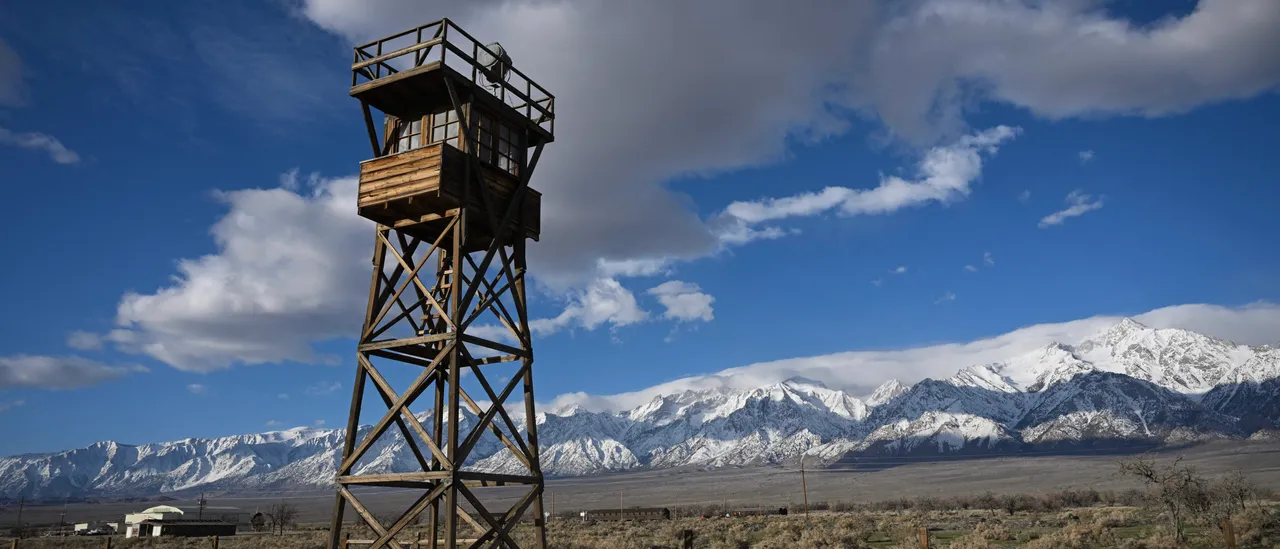
EXCLUSIVE: Navy Accused Of Lowballing Nevada Ranch Families In Massive Land Grab
Nevada rancher Adrienne Snow remembers riding horseback across the high desert as military helicopters thundered overhead.
Read more Florida GOP Lawmakers Abandon Scandal-Plagued Cory Mills, Back Primary Challenger
“You could just bottle up what being an American feels like: to be on a horse with military helicopters flying over you and listening to the national anthem from ‘Top Gun,’” Snow told the Daily Caller. “There’s nothing like it.”
For decades, ranching families in Churchill County raised cattle as military aircraft from Naval Air Station Fallon, home to the Navy’s elite TOPGUN program, trained overhead.
Now, Snow and eight other ranching families say the Navy’s massive expansion of the Fallon Range Training Complex could destroy operations that have survived for generations — while paying them only a fraction of what their losses are worth.
The ranchers are raising a troubling allegation: that federal officials are disregarding agricultural valuation systems created by the federal government itself when determining how much affected families should be paid. The Navy has offered the Snow family $1.48 million for losses projected over 100 years, even though a U.S. Department of Agriculture (USDA) methodology cited by the family places the annual value of its forage alone at roughly $815,000.
At the center of the dispute is the Navy’s acquisition of more than 769,000 acres connected to the modernization of the Fallon Range Training Complex.
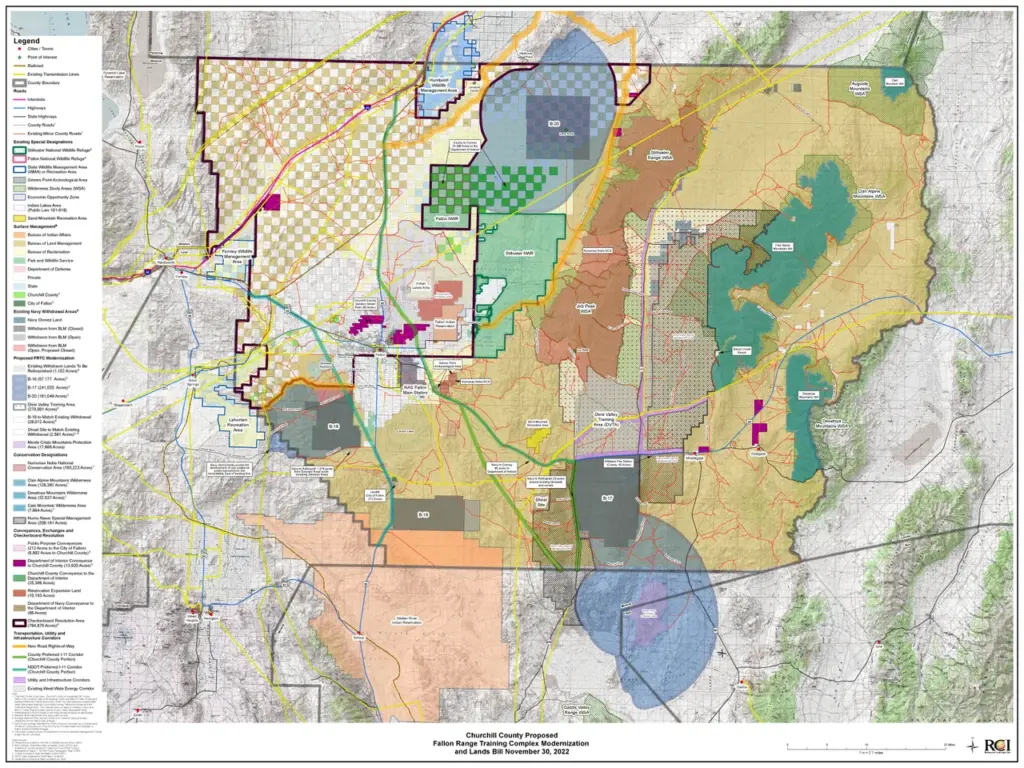
Congress approved a scaled-back version of the Navy’s original expansion proposal in the Fiscal Year 2023 National Defense Authorization Act after years of negotiations among federal officials, tribes and ranchers.
The legislation transferred roughly 489,000 acres of Bureau of Land Management (BLM) property to Navy control for expanded training ranges, according to The Fallon Post. The project is part of a broader effort that Navy officials have argued is necessary to prepare pilots for modern warfare and maintain military readiness.(RELATED: Navy IDs Missing Sailor From Helicopter Emergency Landing Near Iran)
The expansion, the families say, will cut them off from vast stretches of high-desert grazing land that sustain their cattle operations.
“You’re breaking me as a rancher right now,” Lahontan allotment rancher Justin Snow told officials during an Intergovernmental Executive Committee (IEC) meeting in March. “You’re going to take my ranch and pay me $14,000 a year … Unacceptable.”
Justin and Adrienne Snow, whose family has been involved in negotiations with the Navy for years, said the dispute began after the Navy announced its modernization plans in 2016.
According to Adrienne, the ranchers initially looked for ways to continue operating alongside the military rather than lose access to the land altogether. She said they proposed coordinating grazing schedules around training exercises and using technology to monitor water infrastructure, but the Navy determined those alternatives were incompatible with its safety requirements.
The project was later resumed following COVID-19-related delays and ultimately moved through Congress before reaching President Joe Biden’s desk in December 2022. (RELATED: EXCLUSIVE: US Navy Tried Censoring Commander Online After He Called Out Admirals)
Republican Nevada Rep. Mark Amodei, whose district includes much of the northern part of the state, previously supported the compromise legislation, arguing that it represented a significant improvement over the Navy’s original proposal and included protections negotiated on behalf of local stakeholders.
“This measure represents one of the most significant pieces of Nevada lands legislation in our state’s history,” Amodei said when the measure cleared Congress, according to the Las Vegas Review-Journal.
He said the modernization agreement reflected a “rare, overwhelming, bipartisan consensus.”
Yet many ranchers say those protections have not translated into fair compensation.
Navy officials have requested extensive financial documentation from affected ranchers, including tax returns, payroll records, asset lists, loan information and grazing records to calculate compensation, according to The Fallon Post.
The Snow family claims such documentation should not be necessary because the government could instead rely on existing USDA forage valuation methodologies, which are based on federal agricultural programs and insurance frameworks. They allege that key formulas used to determine forage values were not adequately taken into account during compensation negotiations.
In 1934, President Franklin D. Roosevelt signed the Taylor Grazing Act, which states that when military use prevents grazing, permit holders should receive “fair and reasonable [payment] for the losses suffered.”
Additionally, the USDA Risk Management Agency (RMA) created insurance programs through the Federal Crop Insurance Act (7 U.S.C. §1508) and the.
Those programs recognize pasture, rangeland, and forage as resources with significant economic value and compensate producers when drought reduces forage productivity, using a federal framework to estimate grazing losses.
The RMA assigns pasture, rangeland, and forage values to specific areas using a geographic grid. It also establishes county base values that provide a per-acre benchmark for haying or grazing land.
At a June IEC meeting, Adrienne explained that her family’s allotment has a county base value of $12.45 per acre and a net forage value of $10.45 per acre. Applied to the family’s 78,000-acre allotment, that USDA methodology would produce an estimated annual forage value of approximately $815,000.
That figure covers forage value alone — not the value of grazing permits, ranch improvements, or other economic damages associated with losing the allotment.
The ranchers are not arguing that the USDA formula is necessarily the legally controlling standard. Rather, they contend that it demonstrates how severely the Navy has undervalued their losses.
Read more WWE Hall Of Famer Dory Funk Jr. Dead At 85
Rather than rely on the USDA framework, the Navy “developed a 4-step valuation process for grazing payment losses.” Officials at Naval Air Station Fallon claim their figure includes permit value, forage value, improvement value, and business losses. (RELATED: Solar Doesn’t Use Much Farmland — Until You Define What ‘Much’ Really Means)
Under that system, the Snow family is set to receive a lump-sum payment of $1.48 million for losses projected over a 100-year period.
The family argues that the math does not add up. If the USDA methodology values forage alone at more than $800,000 per year, the ranchers contend, a total payment of less than $1.5 million amounts to less than two years of that value.
They also say the Navy’s offer fails to adequately account for taxes, loan obligations, legal and consulting fees and the cost of purchasing additional feed during the decade-long negotiation process.
Naval Air Station Fallon officials disputed the ranchers’ characterization of the compensation process.
“The Navy’s appraisal and compensation methods adequately account for all losses under the law as a result of the withdrawal or other national defense-related use,” officials said in a statement to the Daily Caller. “The Navy notes that, in calculating grazing-related losses and determining the payment amounts tendered to affected permittees, its valuation process incorporates a 100-year timeframe for projecting future losses.”
The ranchers acknowledge that the Navy considered multiple categories of loss. Their objection is that the government’s final valuation remains far too low when compared with the USDA forage benchmark.
The Daily Caller contacted the USDA, BLM and Department of War for comment. Each agency declined to comment and referred questions to the Navy.
After nearly a decade of meetings, legal expenses and negotiations, the families say the fight has taken a personal toll.
“I would have thrown in the towel a long time ago. Because constantly fighting takes a toll on you as a human being, it takes a toll on the quality of your family life, and it has taken a toll on our family’s life,” Adrienne said with tears in her eyes. “But Justin does not back down. I mean, he’s like an oak tree.”
The Snow family has used the Lahontan allotment since the early 1980s. The property includes 225 acres of private land and 78,000 acres of BLM land, which the family accesses through a grazing permit that renews every ten years.
Justin said outsiders often assume ranchers pay little to use federal grazing land. In reality, he said, the family bears ongoing tax, mortgage and operating costs tied to the ranch.
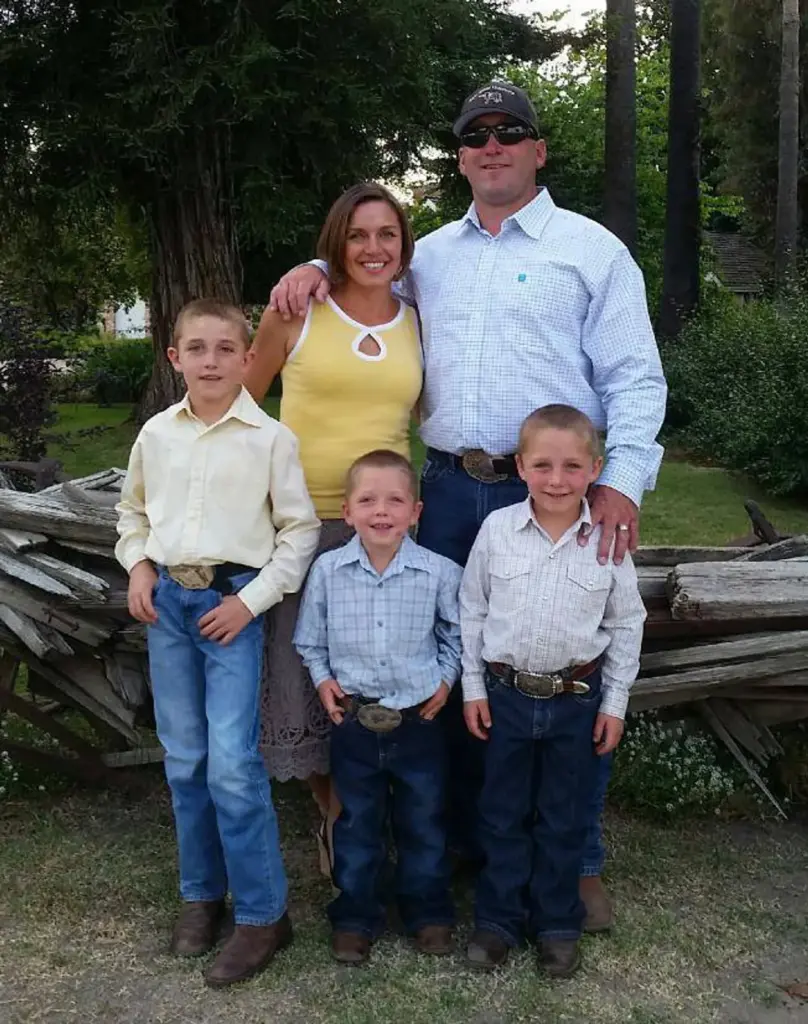
The couple raised three sons on the property, teaching them to manage the ranch and the family business they hoped to pass down. (RELATED: Lake Tahoe Residents Searching For New Power Source After Data Centers Move In)
“It does make me sad,” Adrienne said. “My grandkids will never have the chance to be as capable as my kids.”
The families say the loss cannot be measured solely in acres or dollars. They fear the expansion will end a way of life passed down through generations.
During a Senate Armed Services Committee hearing, Democratic Nevada Sen. Jacky Rosen argued that affected permit holders deserve “full and complete compensation for their lifetime losses” and noted that the families would never again be able to use the withdrawn land.
Rosen’s concerns are echoed by agricultural business experts, who say the government’s compensation process fails to account for the true value of what ranching families stand to lose.
“The same federal government that created these valuation systems is now allegedly ignoring them when it’s time to compensate the people they were designed to protect,” Mark Faust, a nationally recognized agricultural business strategist, told the Caller. “These are not hobby ranches. These are functioning, multi-generational economic ecosystems. And the ranchers believe the federal government is attempting to value them as though they are little more than vacant dirt.”
The expansion will leave the families with fewer acres to sustain their operations. Much of the land remaining to them is barren and unsuitable for grazing, Adrienne said, calling the situation a “death march.”
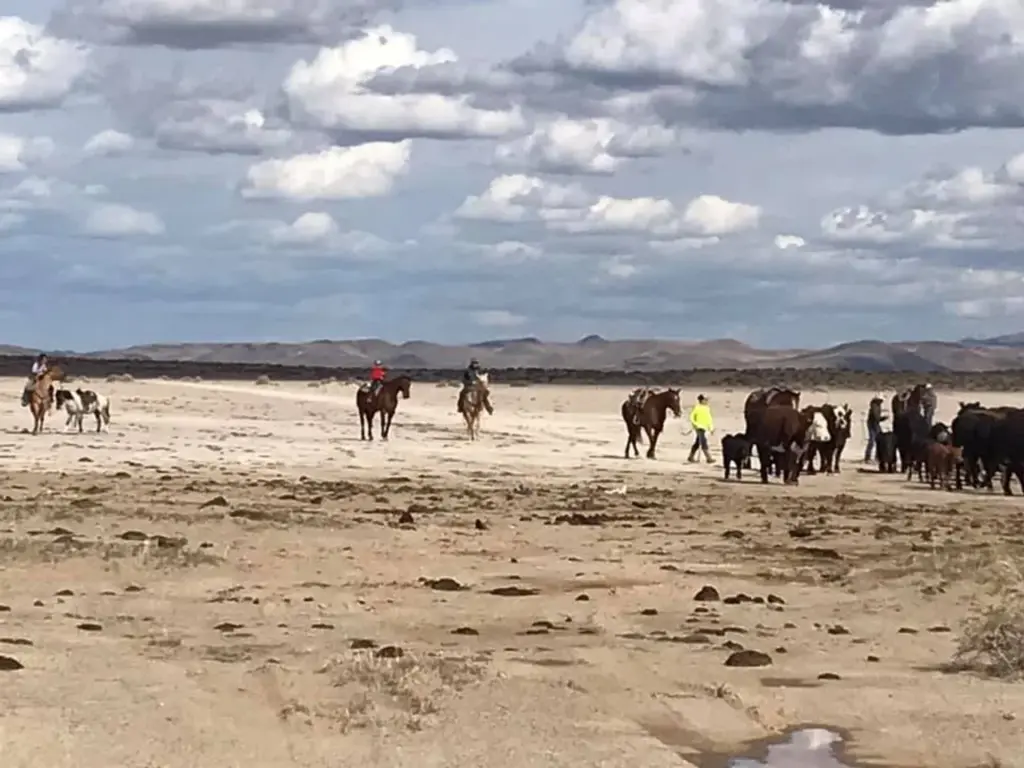
The families say they have accepted that they will lose access to the land. What they have not accepted is compensation they believe fails to reflect the destruction of businesses and a way of life that has defined rural Nevada for generations. (RELATED: Young People Realizing Older Generations Not So Bad As They Adopt Old-School Hobbies, Behavior)
“This is a culture,” one rancher said in the families’ media release. “People recognize Native American culture as something worth preserving. But this cowboy and ranching culture — the last real bastion of the American West — is disappearing too.”
Adrienne said the ranchers share a distinct culture even if it is not formally recognized as one.
“We are not a race. We are not a religious group,” she said. “However, you can pick someone from our culture out by looking at us across the room.”
As the Navy moves forward with one of the largest military land expansions in Nevada’s modern history, the dispute is no longer over whether the land will be used for national defense. The remaining question is whether families who spent years negotiating with federal officials will receive compensation that reflects not only the value of the grazing land, but the way of life they face losing.











Post Comment